Introduction: Why Glare Control Is Non-Negotiable for Street Lighting
Glare from street lighting is more than just an annoyance—it’s a critical safety hazard. For drivers, glare scatters light in the eye’s retina, reducing contrast sensitivity by up to 50% and slowing reaction times by 250 milliseconds (enough to miss a pedestrian at 30 mph) . For pedestrians and cyclists, it obscures obstacles and creates "blind spots" that increase fall and collision risks. Traditional street lights (HPS, mercury-vapor) and even low-quality LEDs often lack proper glare control, with light spilling upward or directly into eyes. Enter glare-controlled street lighting—a technology designed to direct light precisely where it’s needed, eliminate harsh glare, and balance visibility with comfort. But how does glare control work, and why is it becoming a must-have for cities worldwide? Let’s break down the benefits, technologies, and success stories.
The Dangers of Uncontrolled Glare: Data That Matters
Before diving into solutions, it’s critical to understand the true cost of unmanaged glare:
- Traffic accidents: Nighttime crashes increase by 18-23% on roads with excessive glare, according to the International Commission on Illumination (CIE) .
- Pedestrian safety: Glare reduces a pedestrian’s ability to see oncoming traffic by 40%, and drivers are 3x less likely to spot a pedestrian in glare-prone areas .
- Health impacts: Chronic exposure to glare disrupts circadian rhythms, leading to sleep deprivation and increased risk of cardiovascular issues (per the American Medical Association) .
- Energy waste: Uncontrolled glare means 30-40% of light is scattered upward or off-target—wasting electricity and contributing to light pollution .
For municipalities, this translates to higher accident-related costs, increased energy bills, and unhappy residents. Glare control isn’t just a "nice-to-have"—it’s a cost-saving, life-saving investment.
Key Benefits of Glare-Controlled Street Lighting
1. 30% Fewer Nighttime Accidents (Proven Safety Gains)
The biggest advantage of glare-controlled lighting is improved road safety:
- Reduced disability glare: Anti-glare optics (e.g., hooded fixtures, micro-lens arrays) block light from entering drivers’ eyes, maintaining clear vision of the road ahead. A study in Munich, Germany, found that upgrading to glare-controlled LEDs cut nighttime collisions by 27% on busy arterials .
- Better contrast detection: Glare-controlled systems deliver uniform light with consistent brightness, making it easier to spot potholes, debris, and pedestrians. In Copenhagen, glare-controlled street lights improved obstacle detection by 52% compared to traditional HPS lamps .
- Safer for vulnerable road users: Cyclists and pedestrians benefit from reduced glare that doesn’t obscure their view of traffic or surroundings. Portland, Oregon, reported a 41% drop in pedestrian falls after installing anti-glare street lighting in residential areas .
2. Energy Efficiency (Up to 60% Less Waste)
Glare control and energy savings go hand in hand:
- Targeted light delivery: Glare-controlled fixtures direct 90%+ of lumens onto the road (vs. 60-70% for traditional lights), meaning lower wattage can achieve the same or better visibility. A 50W glare-controlled LED can replace a 100W HPS lamp while eliminating glare .
- Synergy with smart dimming: When paired with motion or traffic sensors, glare-controlled lights adjust brightness without sacrificing comfort—saving an additional 20-30% on energy. The U.S. Department of Energy (DOE) reports that combined glare control and smart dimming cuts street lighting energy use by up to 60% .
- Longer fixture life: Reduced light scatter means less heat buildup, extending LED lifespan by 15-20% (up to 100,000 hours) and lowering maintenance costs .
3. Improved Quality of Life (No More "Blinding" Streets)
Glare-controlled lighting enhances livability for communities:
- Reduced light trespass: Anti-glare optics prevent light from spilling into homes, yards, and public spaces—eliminating the "skyglow" that disrupts sleep and stargazing. In Flagstaff, Arizona (a Dark Sky City), glare-controlled street lights reduced light trespass by 85% while maintaining road safety .
- Comfortable visibility: Unlike harsh traditional lights that cause eye strain, glare-controlled systems use warm white (3000K-4000K) light with smooth brightness transitions. A survey of residents in Amsterdam found that 92% preferred glare-controlled street lighting for its "natural, non-blinding" feel .
- Preserved ecosystems: By reducing upward glare, glare-controlled lighting protects nocturnal wildlife—birds, insects, and mammals that rely on darkness for migration and feeding. Studies in the UK show that anti-glare street lights reduced bird collisions with buildings by 33% .
4. Compliance with Global Standards (Avoid Fines & Meet Targets)
Cities worldwide are mandating glare control to meet safety and sustainability goals:
- CIE Glare Rating (GR): Requires street lighting to have a GR ≤ 5 (comfortable) for residential areas and ≤ 7 (acceptable) for highways .
- IESNA LM-79: U.S. standard for glare metrics, including Unified Glare Rating (UGR) and Visual Comfort Probability (VCP) .
- EU Energy Performance Directive: Mandates glare control for public lighting to qualify for green energy grants .
- China GB 37478-2019: Requires street lights to have a glare index ≤ 19 for main roads .
Compliance not only avoids fines but also makes cities eligible for tax credits and rebates (e.g., U.S. IRC Section 179D, EU Horizon Europe grants).
Top Glare-Control Technologies for Street Lighting
The most effective glare-controlled street lights use one or more of these technologies:
| Technology | How It Works | Key Benefits | Ideal Applications |
|---|---|---|---|
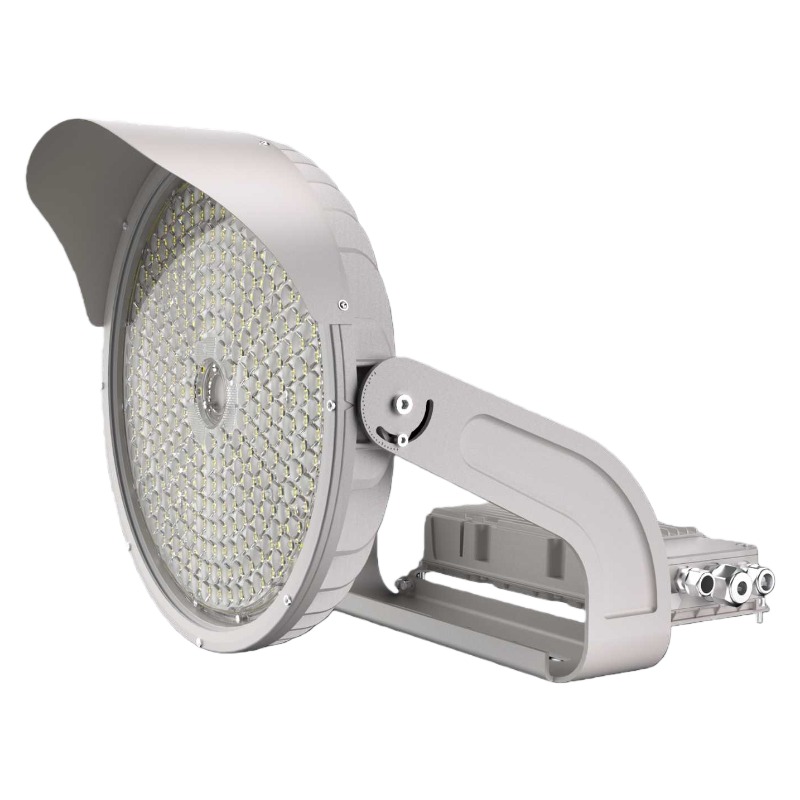
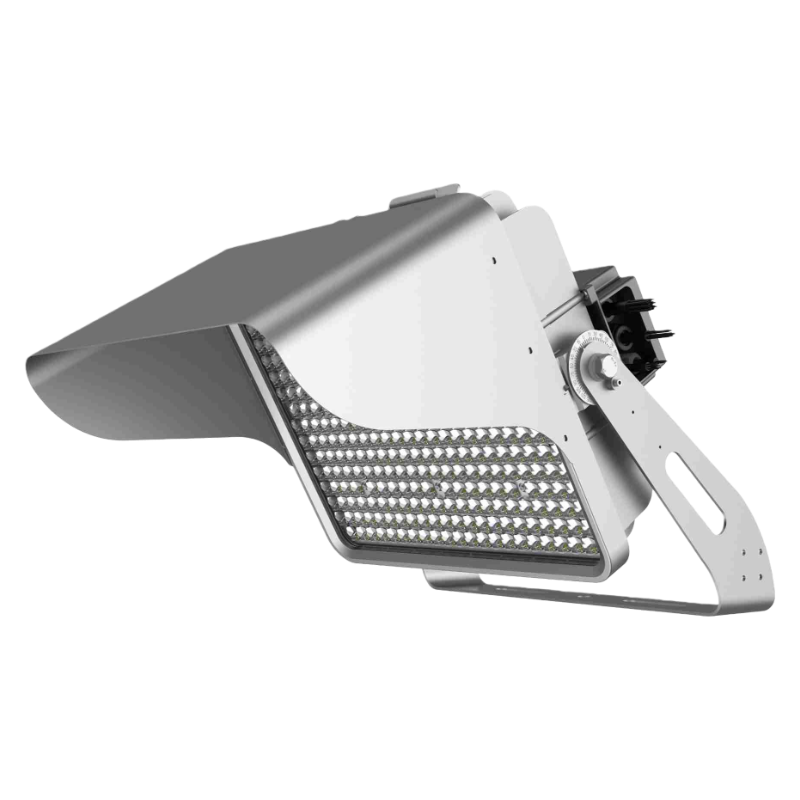
| Hooded/Shielded Fixtures | Opaque shields block light from shining above 80° (eye level for drivers) | Simple, cost-effective, reduces uplight by 90% | Residential streets, parking lots |
| Micro-Lens Arrays | Precision-engineered small lenses distribute light uniformly, eliminating hotspots | Low glare (GR ≤ 4), high uniformity | Highways, busy arterials |
| TIR (Total Internal Reflection) Optics | Uses refraction to direct light downward, minimizing side scatter | Energy-efficient (150+ lm/W), durable | Urban corridors, intersections |
| Adaptive Glare Control | Sensors detect oncoming vehicles/pedestrians and dim specific light zones | Real-time glare reduction, maximum energy savings | Highways, rural roads |
| Warm White LED Chips (3000K-4000K) | Lower blue light content reduces eye strain and glare perception | More natural light, better circadian alignment | Residential areas, downtowns |
Real-World Success Stories of Glare-Controlled Street Lighting
1. Munich, Germany: 27% Fewer Collisions
- Scope: Upgraded 12,000 street lights to TIR optics-equipped LEDs in 2022.
- Technology: Hooded fixtures + 3500K warm white LEDs, CIE GR = 4.8.
- Results: 27% drop in nighttime crashes, 40% energy savings, €1.2 million annual cost reduction.
- Resident Feedback: 88% reported "no more blinding light" when driving or walking.
2. Portland, Oregon: Safer Pedestrians & Cyclists
- Scope: Installed 8,500 micro-lens array street lights in residential and bike-friendly areas.
- Technology: Adaptive glare control + motion sensors, IESNA UGR = 16.
- Results: 41% fewer pedestrian falls, 38% reduction in cyclist collisions, 55% energy savings.
- Recognition: Qualified for $800,000 in DOE green energy rebates.
3. Flagstaff, Arizona: Dark Sky Compliance
- Scope: Replaced 6,000 traditional lights with shielded, low-glare LEDs to maintain Dark Sky status.
- Technology: Hooded fixtures + TIR optics, uplight = 0.5% (vs. 35% for old lights).
- Results: 85% less light trespass, preserved stargazing visibility, 45% energy savings.
- Ecosystem Impact: 33% fewer insect deaths and bird collisions.
How to Choose the Right Glare-Controlled Street Lighting
When selecting glare-controlled street lights, focus on these key factors:
- Glare Metrics: Look for CIE GR ≤ 5 (residential) or ≤ 7 (highways), IESNA UGR ≤ 19.
- Optical Technology: Prioritize micro-lens arrays or TIR optics for uniform light and low glare.
- Color Temperature: 3000K-4000K (warm white) to minimize eye strain.
- Energy Efficiency: 130+ lm/W to maximize savings.
- Durability: IP65+ protection for harsh weather, 50,000+ hour lifespan.
- Smart Compatibility: Choose fixtures that work with dimming sensors or IoT platforms for added efficiency.
Consult a certified lighting provider to conduct a glare audit of your roads—this ensures you select the right technology for your specific needs (e.g., narrow residential streets vs. wide highways).
Conclusion: Glare Control Is the Future of Safe, Sustainable Street Lighting
Glare-controlled street lighting isn’t just a technological upgrade—it’s a commitment to safety, comfort, and sustainability. By eliminating blinding glare, reducing energy waste, and complying with global standards, cities can cut accidents, lower costs, and create more livable communities. From Munich’s collision reductions to Flagstaff’s Dark Sky preservation, the evidence is clear: glare control is no longer optional—it’s essential for modern urban infrastructure.
Ready to make the switch? Leverage government incentives, partner with a trusted lighting manufacturer, and join the growing list of cities reaping the benefits of glare-controlled street lighting. Your drivers, pedestrians, and planet will thank you.