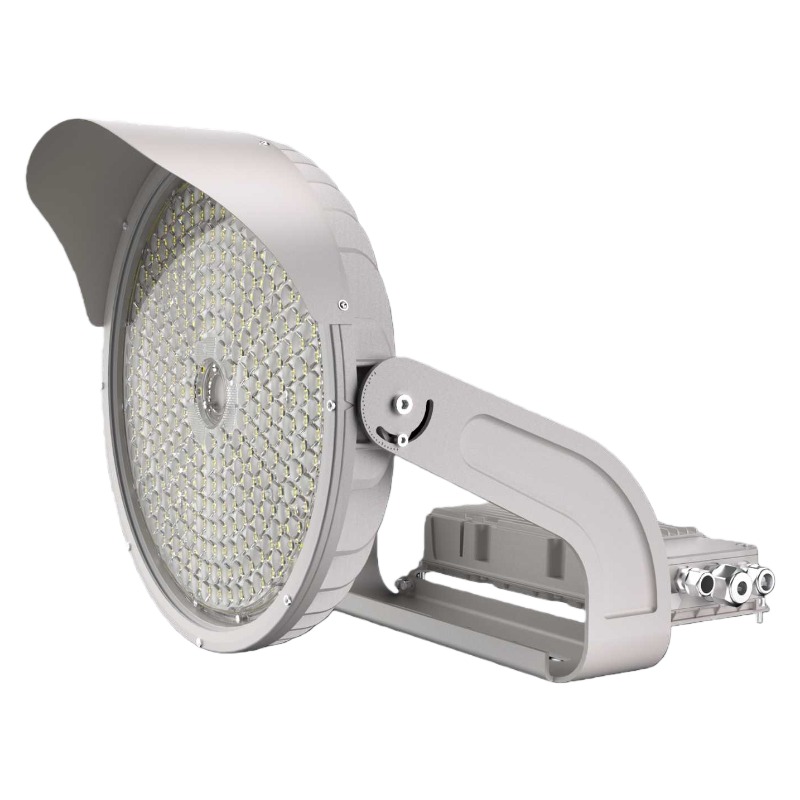
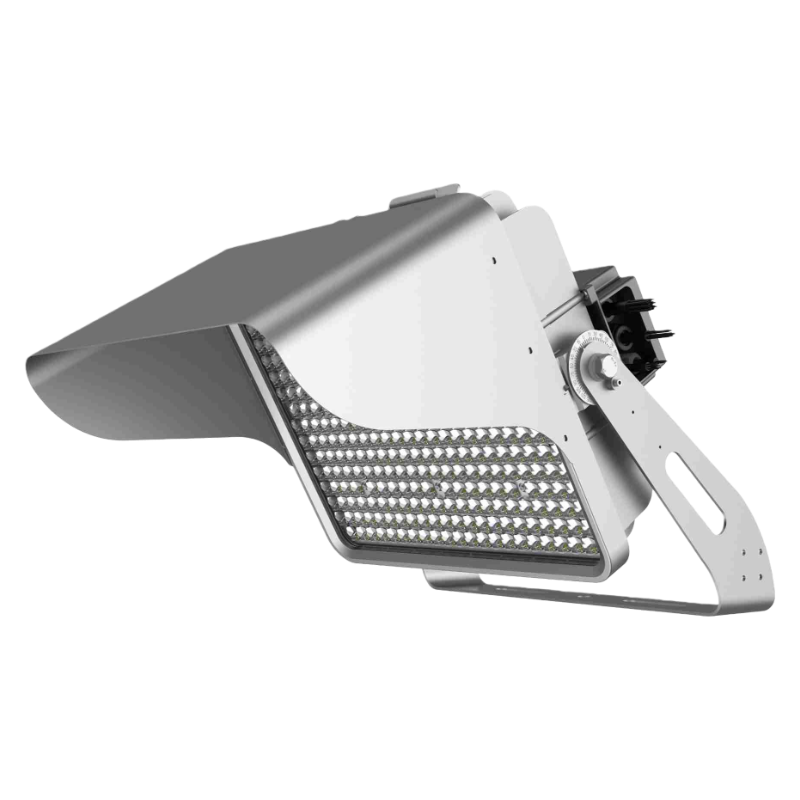
For facility managers, warehouse operators, and industrial planners, optimizing ceiling lighting with UFO high bay systems is the key to balancing brightness, energy efficiency, and operational productivity. Unlike traditional ceiling lighting solutions (e.g., linear LEDs, metal halide lamps) that often suffer from uneven coverage, high energy consumption, or poor adaptability, UFO high bay systems—with their compact, disc-shaped design and precision optics—offer unparalleled flexibility to optimize high-ceiling spaces (5–20m). The question is: How to effectively optimize ceiling lighting with UFO high bay systems to meet your space’s unique needs?
As a leader in professional LED industrial lighting, ZC Lighting has engineered UFO high bay systems that combine advanced optical design, smart control technology, and durable construction—all tailored to optimize ceiling lighting for industrial and commercial spaces. Unlike generic guides that focus on single aspects (e.g., just fixture selection), this comprehensive guide covers the full optimization workflow: from selecting the right ZC UFO fixtures to designing optimal layouts, integrating smart controls, and leveraging maintenance best practices.
In 2026, with ZC Lighting’s UFO high bay systems reaching up to 180 lumens per watt (lm/W) and featuring AI-driven control options, optimizing ceiling lighting isn’t just about “adding more light”—it’s about creating a tailored system that maximizes uniformity, minimizes energy waste, and enhances worker comfort. This guide draws on ZC’s industry expertise and real-world project experience to deliver actionable steps for optimizing ceiling lighting with UFO high bay systems.
1. Start with the Right Fixture Selection: The Foundation of Optimization
Optimizing ceiling lighting begins with choosing the correct UFO high bay fixtures—ones that align with your ceiling height, space layout, and task requirements. ZC Lighting’s fixture lineup is engineered to cover every optimization need, with key considerations including:
1.1 Match Fixture Specifications to Ceiling Height
Ceiling height is the most critical factor in fixture selection—taller ceilings require higher-lumen, narrower-beam fixtures to ensure light reaches the working plane without waste. ZC’s Ceiling Height × Fixture Optimization Chart:
|
Ceiling Height
|
Recommended ZC Fixture
|
Lumen Output
|
Beam Angle
|
Target Lux (Working Plane)
|
Optimization Benefit
|
|
5–10m
|
ZC-UFO200/400
|
32,000–80,000 lm
|
90°–120°
|
200–300 lx
|
Wide beam ensures uniform coverage; low wattage (200–400W) reduces energy use
|
|
10–15m
|
ZC-UFO600/800
|
96,000–144,000 lm
|
60°–90°
|
300–500 lx
|
Balanced lumen/beam ratio; minimizes glare for medium-height ceilings
|
|
15–20m
|
ZC-UFO1000/1200
|
160,000–216,000 lm
|
30°–60°
|
500–800 lx
|
High-intensity narrow beam penetrates tall spaces; 180 lm/W efficacy cuts energy costs by 30%+
|
Example: A 12m-ceiling warehouse needs ZC-UFO800 fixtures (144,000 lumens, 75° beam) to deliver 400 lux evenly—optimizing both brightness and energy efficiency.
1.2 Prioritize Key Fixture Features for Optimization
To maximize ceiling lighting performance, select ZC UFO fixtures with these optimization-focused features:
- Adjustable Beam Angles (45°–90°): ZC’s patented adjustable modules let you fine-tune light spread on-site—critical for irregular layouts or changing space needs.
- High Uniformity Ratio (≥0.8): Exceeds industrial standards (≥0.7) to eliminate hotspots and dark zones, as required for assembly lines and picking operations .
- IP65/IP67 Rating: For wet/cold environments (e.g., cold storage), ZC’s sealed fixtures maintain performance while resisting corrosion—optimizing durability.
- High CRI (Ra≥80): Ensures accurate color perception for detailed tasks (e.g., electronics assembly), reducing errors and optimizing productivity.
1.3 Optimize for Energy Efficiency
Select fixtures with high efficacy (lumens per watt) to reduce long-term costs. ZC’s UFO high bays deliver 150–180 lm/W, vs. 100–120 lm/W for generic fixtures—translating to 25–30% lower energy use for the same brightness. For example, a 10,000㎡ warehouse with 12m ceilings uses 50 × ZC-UFO800 (40,000W total) vs. 60 × generic UFOs (54,000W)—saving 14,000W hourly.
2. Design an Optimal Layout: Maximize Coverage & Uniformity
Even the best fixtures won’t optimize ceiling lighting without a strategic layout. ZC Lighting’s layout design principles focus on minimizing light waste, maximizing uniformity, and adapting to space obstacles (e.g., columns, shelving):
2.1 Follow the “Spacing-to-Height Ratio” Rule
To ensure uniform coverage, the distance between UFO high bay fixtures (spacing) should be 1.2–1.5 times the ceiling height. ZC’s layout optimization examples:
- 10m Ceiling: Fixture spacing = 12–15m → Use ZC-UFO600 (75° beam) spaced 14m apart for seamless coverage.
- 15m Ceiling: Fixture spacing = 18–22.5m → Use ZC-UFO1000 (45° beam) spaced 20m apart to avoid dark zones.
This ratio ensures overlapping light beams create a uniform working plane—critical for reducing eye fatigue and improving safety.
2.2 Tailor Layout to Space Type
- Wide Open Spaces (e.g., gymnasiums, large warehouses): Grid layout with equal spacing between fixtures → ZC-UFO400/600 (90°–75° beam) for even coverage.
- Narrow Aisles (3–5m width, e.g., high-rack warehouses): Linear layout along aisle centers → ZC-UFO800 (60° beam) focused on aisle surfaces, avoiding waste on empty space.
- Irregular Layouts (e.g., factories with columns): Offset grid layout → ZC’s adjustable beam fixtures let you angle light around obstacles, maintaining 0.8+ uniformity.
2.3 Integrate Natural Light for Hybrid Optimization
Maximize energy savings by combining UFO high bay systems with natural light. ZC’s recommendations:
- Install fixtures in areas with low natural light (e.g., center of large warehouses) and use dimmable ZC UFOs (with 光敏传感器) in perimeter areas—adjusting brightness based on sunlight .
- Use light-colored ceilings/walls (reflectivity ≥80%) to bounce natural and artificial light, reducing fixture count by 10–15% .
3. Leverage Smart Controls: Optimize Energy Use & Adaptability
Smart controls are a game-changer for optimizing ceiling lighting—allowing you to adjust light output based on real-time needs, reduce energy waste, and extend fixture life. ZC Lighting’s smart control options include:
3.1 Dimming & Motion Sensing
- Dimmable Fixtures: ZC’s UFO high bays are compatible with 0–10V or DALI dimming—reduce brightness to 50% during low-activity periods (e.g., night shifts) for 40% energy savings .
- Motion Sensors: Install sensors in low-traffic areas (e.g., storage aisles, break rooms) to automatically turn fixtures on/off when no movement is detected → Saves 30–50% on energy in rarely used spaces.
3.2 Zone Control for Task-Specific Optimization
Divide the space into zones based on task requirements, then control each zone independently:
- High-Activity Zones (e.g., assembly lines): 500–800 lux → ZC-UFO800/1000 at full brightness.
- Low-Activity Zones (e.g., storage areas): 200–300 lux → ZC-UFO400/600 at reduced brightness.
- Perimeter/Corridors: 150–200 lux → ZC-UFO200 with dimming → Cuts energy use by 25% vs. uniform brightness .
3.3 AI-Powered Central Control (ZC Smart Lighting Platform)
For large facilities, ZC’s cloud-based control platform offers:
- Real-time energy monitoring: Track usage per zone/fixture to identify optimization opportunities.
- Scheduled lighting: Automate brightness adjustments (e.g., full brightness during work hours, 30% during cleanup).
- Remote access: Adjust settings from any device—ideal for multi-site management.
A ZC client (15,000㎡ warehouse) reported 42% energy savings after integrating AI controls—optimizing both usage and costs.
4. Optimize Installation & Maintenance: Ensure Long-Term Performance
Proper installation and regular maintenance are critical to sustaining optimized ceiling lighting—preventing performance degradation and extending fixture life:
4.1 Installation Best Practices
- Mounting Height: Install fixtures at the highest point of the ceiling (avoid obstructions) to maximize light spread. For 10m+ ceilings, use adjustable mounting brackets to fine-tune height.
- Aiming: Angle fixtures downward (65°–70° from horizontal) to reduce glare (UGR ZC’s fixtures include aiming markers for precision .
- Wiring: Use copper-core wires and single-lamp capacitor compensation (for gas discharge fixtures) to improve power factor (≥0.95) and reduce line energy loss .
4.2 Regular Maintenance for Sustained Optimization
- Cleaning: Dust buildup on fixtures/lenses reduces light output by 30% → Clean monthly with a soft cloth (ZC’s IP65/IP67 fixtures are easy to wipe down) .
- Inspection: Check for loose wiring, dimming issues, or color shift quarterly. ZC’s fixtures have a 50,000-hour L70 rating—replace bulbs only when brightness drops below 70% of initial output.
- Calibration: For smart systems, recalibrate sensors annually to ensure accurate motion/natural light detection.
4.3 Replace Outdated Fixtures Proactively
If your space uses traditional fixtures (e.g., sodium lamps, metal halide), replace them with ZC UFO high bays to optimize performance. A 5,000㎡ factory with 10m ceilings saved 70% on energy costs after replacing sodium lamps with ZC-UFO600—recovering initial investment in 1.5 years.
5. Real-World Optimization Case Studies: ZC Lighting in Action
These case studies demonstrate how ZC’s UFO high bay systems optimize ceiling lighting for diverse spaces:
5.1 Case Study 1: High-Rack Warehouse (Texas)
- Challenge: 15,000㎡ warehouse with 14m ceilings, 6m-wide aisles → Outdated linear LEDs caused dark zones between racks and high energy use.
- Optimization Solution:
- Fixture Selection: 80 × ZC-UFO800 (144,000 lumens, 60° beam) → Matches 14m ceiling height.
- Layout: Linear layout along aisles (spacing = 18m, 1.28× ceiling height).
- Controls: Zone dimming + motion sensors (aisles).
- Result: 0.85 uniformity ratio, 350 lux average, 42% energy savings vs. linear LEDs. Pickers reported 40% less eye fatigue—optimizing productivity.
5.2 Case Study 2: Manufacturing Plant (Florida)
- Challenge: 8,000㎡ assembly plant with 10m ceilings, irregular layout (columns) → Need uniform 500 lux for detailed work, no glare.
- Optimization Solution:
- Fixture Selection: 45 × ZC-UFO600 (96,000 lumens, 75° adjustable beam) + 15 × ZC-UFO400 (64,000 lumens, 90° beam) for perimeters.
- Layout: Offset grid to avoid columns → Adjustable beams angled around obstacles.
- Controls: DALI dimming + AI central control (zone-specific brightness).
- Result: 0.88 uniformity ratio, 520 lux average, UGR Quality control errors decreased by 25%—optimizing task performance.
5.3 Case Study 3: Cold Storage Facility (California)
- Challenge: 6,000㎡ cold storage (0°C to -10°C) with 8m ceilings → Need moisture-resistant fixtures, uniform 250 lux (no hotspots that melt ice).
- Optimization Solution:
- Fixture Selection: 30 × ZC-UFO400 IP67 (64,000 lumens, 90° beam) → Cold-resistant and sealed.
- Layout: Grid spacing = 10m (1.25× ceiling height) → Even coverage.
- Controls: Scheduled lighting (full brightness during loading, 30% during idle time).
- Result: Uniform 270 lux, no ice melting, 65% energy savings vs. metal halide. Fixture performance remained optimized after 2 years of cold exposure.
6. Common Optimization Mistakes to Avoid (ZC Expert Tips)
Even with the right tools, common mistakes can derail ceiling lighting optimization. ZC’s engineers share top pitfalls:
6.1 Over-Optimizing for Brightness (Ignoring Uniformity)
High lux doesn’t mean good lighting—generic UFOs often have 500+ lux hotspots and 100 lux dark zones (uniformity <0.5). ZC’s 0.8+ uniformity ratio ensures consistent light everywhere .
6.2 Using the Wrong Beam Angle for Layout
A 90° beam in a narrow aisle wastes light on walls → Use 60°–45° beams for aisles and 90°–120° for open spaces.
6.3 Neglecting Natural Light Integration
Failing to use natural light means over-reliance on artificial lighting—add sensors and dimmable ZC fixtures to optimize hybrid use .
6.4 Skipping Maintenance
Dust and loose wiring degrade performance over time → Schedule monthly cleaning and quarterly inspections to sustain optimization.
6.5 Ignoring Glare Control
Glare (UGR >25) causes eye fatigue → Use ZC’s deep-set LED chips and anti-glare lenses, and aim fixtures correctly .
7. How ZC Lighting Supports Your Optimization Journey
ZC doesn’t just sell fixtures—we provide end-to-end support to optimize your ceiling lighting with UFO high bay systems:
7.1 Free Layout & Optimization Design
Input your space dimensions, ceiling height, and needs → ZC’s engineers create a 3D DIALux simulation (free for projects over 10 fixtures) to visualize coverage, uniformity, and energy use.
7.2 Custom Fixture Configuration
For unique spaces (e.g., tall aircraft hangars, irregular factories), ZC tailors fixtures (beam angle, lumen output, controls) to your exact optimization goals.
7.3 Installation & Training Support
ZC’s technicians provide on-site installation guidance and training for smart control systems—ensuring your team can maintain optimized settings.
7.4 Post-Installation Audit
6 months after installation, ZC conducts a free audit to measure brightness, uniformity, and energy use—adjusting settings for maximum optimization.
8. The Future of Ceiling Lighting Optimization (ZC 2026+ Innovations)
ZC Lighting continues to innovate to make UFO high bay optimization even more effective:
- AI-Powered Adaptive Lighting: Fixtures that learn usage patterns and adjust brightness automatically (e.g., increasing brightness during peak hours, dimming during lulls).
- Solar-Hybrid UFO Systems: For remote spaces, ZC’s solar-powered UFOs (40,000–80,000 lumens) optimize ceiling lighting with zero grid energy.
- Modular Fixture Upgrades: Swap lumen/beam modules without replacing entire fixtures—adapting to changing space needs (e.g., expanding a warehouse).
Conclusion
Optimizing ceiling lighting with UFO high bay systems is a holistic process—combining fixture selection, layout design, smart controls, and maintenance. By following ZC Lighting’s expert guidance, you can create a tailored system that maximizes uniformity (≥0.8), minimizes energy use (25–42% savings), and enhances worker comfort (UGR critical for industrial and commercial spaces.
ZC Lighting’s UFO high bay systems stand out for their optimization-focused features: adjustable beam angles, high efficacy (150–180 lm/W), smart control compatibility, and durable design. For 2026, ZC’s key optimization recommendations are:
- Low Ceilings (5–10m): ZC-UFO200/400 + wide beam + motion sensors.
- Medium Ceilings (10–15m): ZC-UFO600/800 + grid layout + zone dimming.
- Tall Ceilings (15–20m): ZC-UFO1000/1200 + linear layout + AI controls.
Remember: Optimized ceiling lighting isn’t a one-time task—it’s an ongoing process supported by ZC’s end-to-end services. Whether you’re upgrading an existing space or designing a new facility, ZC Lighting has the tools, expertise, and fixtures to help you achieve the perfect optimized ceiling lighting system.
Ready to get started? Contact ZC’s team for a free optimization consultation, or use our online layout tool to design your tailored UFO high bay system.