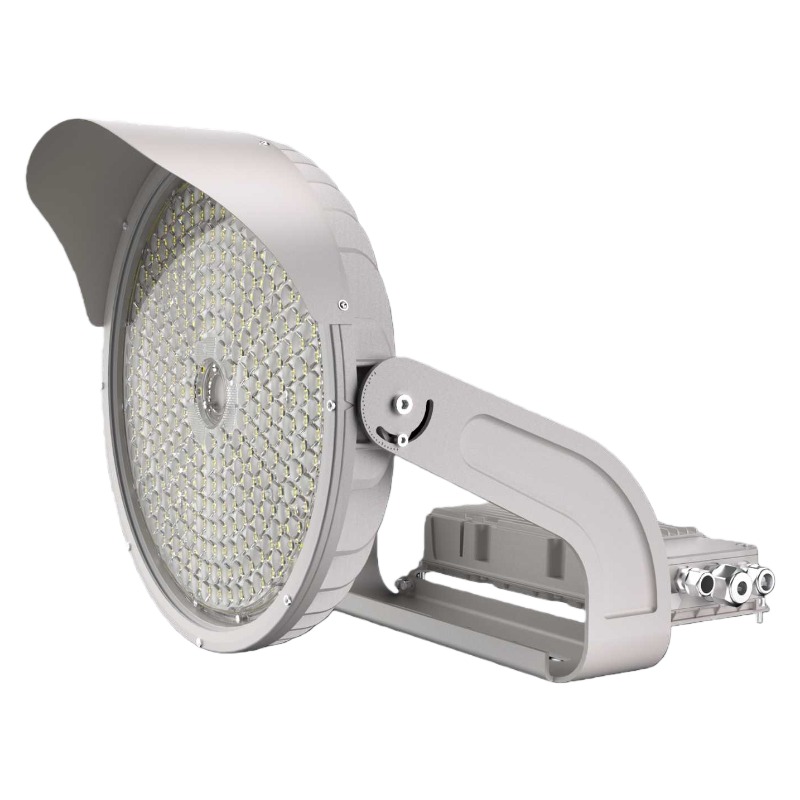
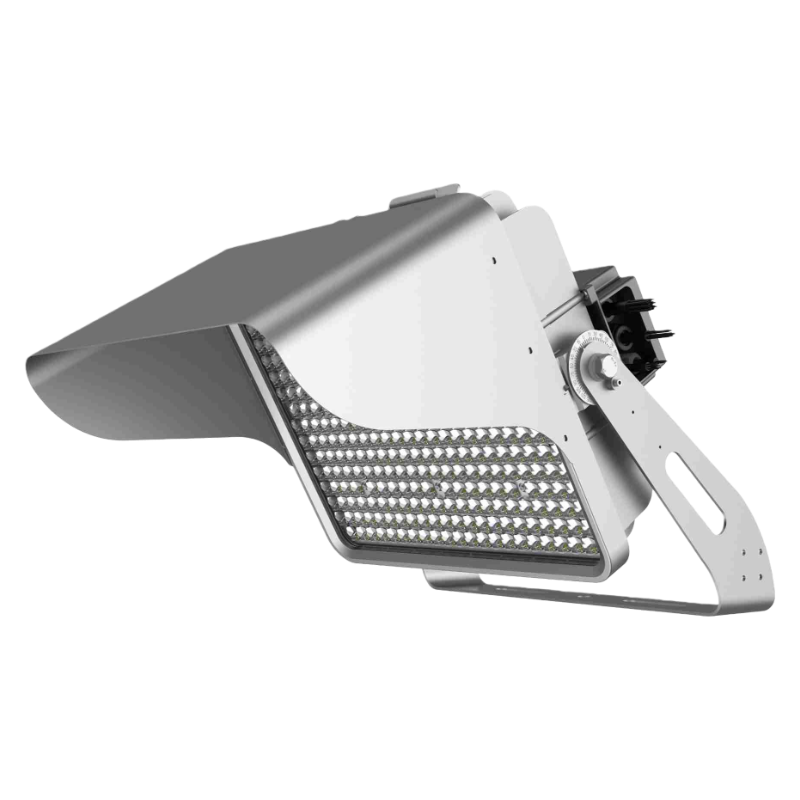
When you install lighting on a pole 80 to 150 feet in the air, "easy replacement" is not an option. Every component must be built for extremes—because the cost of failure is measured in cranes, site shutdowns, and thousands of dollars per service call.
LED high mast lights are not like standard parking lot fixtures. They face hurricane-force winds, lightning strikes, salt spray (ports), temperature swings from -40°F to +120°F, vibration (rail yards, heavy equipment), and airborne debris (mines, industrial sites).
A high mast light that fails in its first year is not just an inconvenience—it is a major financial liability. This guide explains why durability is the single most important factor when selecting LED high mast lights—and how to identify fixtures that will survive for 15+ years in extreme environments.
1. The High Mast Environment: A Hostile World
Let us examine what your high mast lights actually endure.
| Environmental Factor | Real-World Impact | Failure Mode if Not Addressed |
|---|---|---|
| Lightning strikes | Tall poles are prime lightning targets. A single strike can send 100,000+ amps through the system. | Driver failure; complete fixture death |
| Wind (hurricane, typhoon, severe storms) | Poles sway; fixtures experience constant vibration and sudden gust loads. | Structural failure; cracked housings; loose connections |
| Salt spray (coastal, ports) | Corrosion eats aluminum, steel, and electronics. | Rusted mounts; failed driver circuits; lens fogging |
| Temperature extremes | -40°F to +120°F (-40°C to +50°C) – thermal expansion and contraction. | Cracked seals; moisture ingress; solder joint failure |
| Ice / snow loading | Weight of ice on fixtures and brackets. | Bracket failure; fixture detachment |
| Vibration (rail yards, heavy equipment) | Constant low-frequency vibration from trains, trucks, cranes. | Loose connections; flickering; premature driver failure |
| UV radiation | Sun degrades plastics, gaskets, and lens materials. | Yellowed/brittle lenses; seal failure |
| Airborne debris / dust (mines, industrial sites) | Abrasive particles, chemical dust, coal dust. | Lens scratching; heat sink clogging; corrosion |
A standard commercial LED area light (designed for parking lots) will fail quickly in a high mast extreme environment.
2. The High Cost of High Mast Failure
What happens when a high mast light fails?
| Consequence | Estimated Cost (Typical) |
|---|---|
| Crane rental (to reach 100 ft pole) | $2,000–$5,000 per visit |
| Bucket truck (if road-accessible) | $500–$1,500 per visit |
| Electrician labor (2–4 hours) | $200–$600 |
| Replacement fixture | $500–$1,500 |
| Site downtime / disruption | $1,000–$10,000+ (depending on site) |
| Lost productivity (dark zones affect operations) | Variable, but significant |
| Safety / security risk (dark zones) | Priceless |
Example: A single failed fixture on a 100 ft pole at a port terminal:
-
Crane rental: $4,000
-
Electrician (4 hours): $500
-
Replacement fixture: $800
-
Total: $5,300 – for one fixture failure.
Multiply by multiple failures over 10 years: $50,000–$100,000+ in avoidable costs.
Durable LED high mast lights fail rarely or never. Cheap fixtures fail often. The upfront "savings" of cheap fixtures vanish after the first crane call.
3. Critical Durability Features for LED High Mast Lights
When evaluating high mast fixtures, look for these non‑negotiable durability specifications.
A. Surge Protection (Lightning & Grid Surges)
| Requirement | Why It Matters |
|---|---|
| 10kV surge protection minimum (per ANSI C136.2) | Tall poles experience high-energy surges. 10kV is the industry standard for high mast. |
| Type SPD (surge protection device) with thermal fuse | Protects against repeated strikes; thermal fuse prevents fire. |
| Replaceable surge module | When surge protection sacrifices itself (as designed), you replace only the module – not the entire driver or fixture. |
⚠️ Do not accept 5kV or "built‑in MOV only." On a 100 ft pole, 10kV is the minimum. Some port/marine applications require 20kV.
B. Corrosion Resistance (Marine / Coastal / Ports / Chemical)
| Feature | Rating / Specification | Best For |
|---|---|---|
| Housing material | Die‑cast aluminum (copper‑free <0.4%) | All high mast |
| Coating | Hot‑dip galvanized (pole) + powder coat (fixture) | General |
| Marine grade coating | 1,000+ hour salt spray test (ASTM B117) | Coastal, ports, offshore |
| Stainless steel hardware | 316 stainless (vs. 304) | Maximum corrosion resistance |
| Gaskets | Silicone rubber (vs. EPDM or neoprene) | UV and temperature resistance |
Ports and coastal sites: Require written certification of 1,000+ hour salt spray testing. Standard powder coat fails within 2–3 years in marine environments.
C. Wind & Structural Integrity
| Requirement | Specification | Why |
|---|---|---|
| Wind load rating | Certified for 150+ mph (3-second gust) | Hurricane / typhoon regions |
| Vibration testing | ANSI C136.31 (3G vibration) | Rail yards, heavy equipment areas |
| Mounting bracket strength | Cast or forged (not stamped) | Prevents fatigue failure |
| Safety cable (secondary support) | Required by NEC 410.36 for fixtures >6 lbs | Prevents falling fixture if primary mount fails |
Never buy high mast lights without certified wind load documentation. Your permit and insurance depend on it.
D. Ingress Protection (Water & Dust)
| Rating | What It Means | Required For |
|---|---|---|
| IP65 | Dust‑tight; protected from water jets | Minimum for all high mast |
| IP66 | Protected from powerful water jets (100 L/min) | Coastal, heavy rain zones |
| IP67 | Protected from temporary immersion (1m, 30 min) | Flood‑prone areas, very harsh environments |
IP66 is the recommended minimum for high mast. IP65 may be acceptable for inland, dry climates.
E. Operating Temperature Range
| Requirement | Specification | Why |
|---|---|---|
| Cold rating | -40°F (-40°C) minimum | Northern climates, cold storage adjacent |
| Hot rating | +120°F (+50°C) minimum | Desert, industrial heat |
| Thermal management | Passive cooling (finned heat sink) – no fans | Fans fail; passive is reliable |
LED drivers have temperature ratings. A driver rated for -40°F to +120°F ensures reliable operation across seasons.
F. Lens Durability
| Feature | Specification | Benefit |
|---|---|---|
| Lens material | Tempered glass (vs. polycarbonate) | Scratch resistance; UV stability; no yellowing |
| Impact resistance | IK08 or IK09 (5–10 joules) | Vandalism, debris, hail |
| Self‑cleaning / hydrophobic coating | Optional | Reduces dirt accumulation |
Polycarbonate lenses yellow and craze under UV in 5–7 years. Tempered glass lasts the life of the fixture.
4. Component-Level Durability: Driver & LEDs
The driver (LED power supply) is the most common failure point in any LED fixture. In high mast applications, driver failure is catastrophic.
Driver Durability Checklist
| Feature | Requirement | Why |
|---|---|---|
| Driver type | External, replaceable (not integrated into PCB) | When driver fails, replace only driver – not entire fixture |
| Driver brand | Mean Well, Inventronics, Philips, EldoLED (reputable) | Cheap no‑name drivers fail early |
| Driver potting | Fully potted (conformal coating) | Moisture and vibration resistance |
| Driver lifespan rating | 100,000+ hours @ case temperature ≤70°C | Matches LED lifespan |
| Driver warranty | 10 years (minimum) | Confidence in reliability |
LED Board Durability
| Feature | Requirement | Why |
|---|---|---|
| LED brand | Cree, Lumileds, Nichia, Osram, Samsung (top tier) | Consistent performance, long life |
| LED board type | Metal‑core PCB (MCPCB) | Heat dissipation |
| Lumen maintenance | L90 ≥ 60,000 hours; L70 ≥ 100,000 hours | Minimal depreciation over life |
Ask for TM‑21 lifetime projections. Reputable manufacturers provide documented L70 (hours until 70% of initial lumens).
5. Lowering Devices: Durability for Access Systems
A high mast system is only as durable as its lowering device (winch and cable system). If the winch fails, you cannot access the fixtures.
Lowering Device Durability Checklist
| Component | Requirement | Why |
|---|---|---|
| Cable material | Stainless steel (galvanized acceptable for inland) | Corrosion resistance |
| Cable diameter | ≥5 mm (3/16") | Strength and wear resistance |
| Winch housing | Cast aluminum or galvanized steel (not plastic) | Impact and UV resistance |
| Winch gear train | Enclosed, lubricated | Prevents jamming and wear |
| Latch mechanism | Positive locking with secondary safety latch | Prevents unintended lowering |
| Manual override | Provided (even on electric winches) | Operation during power failure |
Test the lowering device annually. A stuck winch turns a routine maintenance job into a crane call.
6. Real-World Durability Case Study
Location: Container terminal, Pacific Northwest (coastal, high wind, salt spray, rain)
Pole height: 100 ft
Previous lighting: 1000W metal halide – constant failures due to corrosion and vibration
Problem: 15–20 fixture failures per year. Each failure cost ~$5,000 in crane + labor. **Annual maintenance cost: $75,000–$100,000.**
Solution: LED high mast lights with:
-
10kV surge protection (replaceable modules)
-
Marine grade coating (1,500 hour salt spray certified)
-
Stainless steel hardware (316 grade)
-
Tempered glass lenses
-
IP66 rating
-
External, replaceable drivers (Mean Well)
-
Heavy‑duty lowering device with stainless cable
Results (3 years after installation):
| Metric | Metal Halide (Before) | LED High Mast (After) |
|---|---|---|
| Fixture failures per year | 15–20 | 0 |
| Crane calls per year | 15–20 | 0 |
| Annual maintenance cost | $85,000 (avg) | $0 |
| Energy cost (annual) | $68,000 | $22,000 |
| Total annual operating cost | $153,000 | $22,000 |
Savings: $131,000 per year
Payback on durability‑focused LED system: 14 months
The terminal manager's quote: "We used to budget for crane calls. Now we don't even think about lighting."
7. Certification & Testing Standards to Demand
Ask your supplier for documentation of these certifications:
| Standard | What It Tests | Passing Requirement |
|---|---|---|
| ANSI C136.2 | Surge protection (lightning) | 10kV minimum |
| ANSI C136.31 | Vibration resistance | 3G for 2 hours |
| ANSI C136.10 | Photocontrol compatibility | N/A |
| ASTM B117 | Salt spray corrosion | 1,000+ hours (marine) |
| UL 1598 | Luminaire safety | Certified |
| UL 8750 | LED components | Certified |
| IES LM‑79 | Electrical and photometric testing | Required for DLC |
| IES LM‑80 / TM‑21 | LED lumen maintenance | L70 > 100,000 hours |
| IP (IEC 60529) | Ingress protection | IP66 minimum |
| IK (IEC 62262) | Impact protection | IK08 or IK09 |
If a supplier cannot provide these documents, do not buy their fixtures for high mast applications.
8. Common Durability Mistakes (And Their Consequences)
| Mistake | Immediate Consequence | Long-Term Cost |
|---|---|---|
| Buying 5kV surge protection (or none) | Fixture destroyed by first lightning storm | $5,000+ crane call + replacement |
| Standard powder coat (non‑marine) in coastal area | Rust and corrosion within 2 years | $10,000+ per pole to replace |
| Plastic / polycarbonate lenses | Yellowing, cracking, light loss after 5 years | Entire fixture replacement |
| Non‑replaceable driver | Whole fixture replacement when driver fails (driver often fails before LEDs) | Double the replacement cost |
| Cheap lowering device (plastic components) | Winch jams or cable breaks; fixtures stuck at 100 ft | Crane call + winch replacement ($10,000+) |
| No vibration rating for rail yard | Loose connections; flickering; early driver failure | Repeated service calls |
| Unknown LED/driver brand | Premature failure; no warranty support | Entire system replacement |
9. Warranty as a Durability Proxy
A manufacturer's warranty tells you how much they trust their own durability.
| Warranty Length | What It Implies |
|---|---|
| 5 years | Standard for commercial area lights (acceptable for low‑stress applications) |
| 10 years | Confident in durability – expected for high mast |
| 10 years with labor coverage | Very confident – rare but valuable |
| Less than 5 years | Do not buy for high mast |
Read the fine print: Does the warranty cover the driver? The LEDs? The surge protection? The finish (corrosion)? Labor? Shipping?
Ideal high mast warranty:
-
10 years on LEDs and driver
-
5–10 years on finish (against corrosion)
-
5 years on lowering device components
-
Prorated coverage is common after year 5 – understand the terms.
10. Supplier Selection: Questions to Ask
Before purchasing LED high mast lights, ask every supplier these durability questions:
| Question | Why It Matters |
|---|---|
| "What is the surge protection rating? Is it replaceable?" | 10kV replaceable is the standard. |
| "Have you performed salt spray testing? Can we see the report?" | For coastal/port sites, this is non‑negotiable. |
| "What brand driver do you use? Is it replaceable in the field?" | Mean Well, Inventronics, etc. Replaceable driver saves money. |
| "What is the wind load certification?" | Required for permits and safety. |
| "What is the lens material?" | Tempered glass > polycarbonate. |
| "What is the warranty length and what does it cover?" | 10 years minimum for high mast. |
| "Do you have TM‑21 lumen maintenance projections?" | Confirms LED lifespan claims. |
| "Can you provide references from similar extreme environments?" | Real-world proof of durability. |
Beware of suppliers who hesitate or cannot provide documentation. High mast is not the place for "good enough."
11. Maintenance Practices to Extend Durability
Even the most durable high mast system benefits from periodic inspection.
| Frequency | Action | Why |
|---|---|---|
| Quarterly (visual) | Inspect from ground with binoculars – check for loose mounts, lens damage, animal nests | Catches problems early |
| Annually (lower ring to ground) | Inspect gaskets, seals, driver compartment moisture, surge module status, hardware torque, lens cleanliness | Preventive maintenance |
| Every 5 years | Replace surge protection modules (even if not failed) – they degrade over time | Ensures continued lightning protection |
| Every 10 years | Consider driver replacement (preventive) if facility is critical 24/7 operation | Avoids unplanned failure |
Keep a maintenance log. Document every lowering, inspection, and component replacement.
12. The Bottom Line: Pay for Durability Upfront or Pay Many Times Over
| Approach | Upfront Cost | 10‑Year Operating Cost | Total 10‑Year Cost |
|---|---|---|---|
| Cheap, non‑durable LED high mast | $100,000 | $150,000+ (multiple crane calls, replacements) | $250,000+ |
| Durable, extreme‑rated LED high mast | $160,000 | $0 (no failures) – $10,000 (preventive maintenance) | $170,000 |
| Legacy metal halide (do nothing) | $0 (already installed) | $300,000+ (energy + maintenance + crane calls) | $300,000+ |
The durable LED system saves you $80,000–$130,000 over 10 years compared to cheap LED – and is far safer and more reliable.
Conclusion
High mast lighting operates in one of the harshest environments of any commercial lighting application. Durability is not a luxury – it is a financial and safety necessity.
The non‑negotiable durability requirements for LED high mast lights:
-
10kV replaceable surge protection – Lightning will strike. Be ready.
-
Marine‑grade corrosion protection (for coastal/ports) – Salt kills standard finishes.
-
IP66 ingress protection – Water and dust are constant threats.
-
Tempered glass lenses – UV and impact resistance.
-
Replaceable, brand‑name driver – The driver will fail before the LEDs. Make it replaceable.
-
Certified wind load and vibration rating – Permits and safety depend on it.
-
Heavy‑duty lowering device – You must be able to access the fixtures.
-
10‑year warranty – Manufacturer confidence in their own durability.
Remember: The upfront premium for durability is typically 20–40% higher than non‑durable alternatives. But the avoided crane calls, eliminated downtime, and zero maintenance make durable LED high mast lights dramatically cheaper over the system lifetime.
Do not gamble on cheap fixtures for your high mast application. The extremes will win – every time.
Built for extremes. Built to last. Specify durability first.