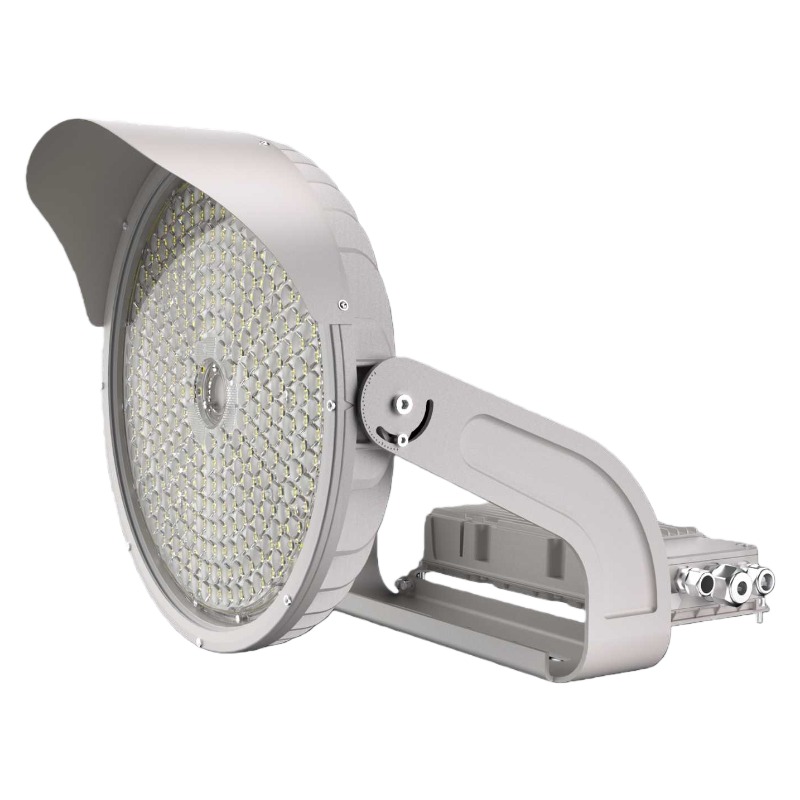
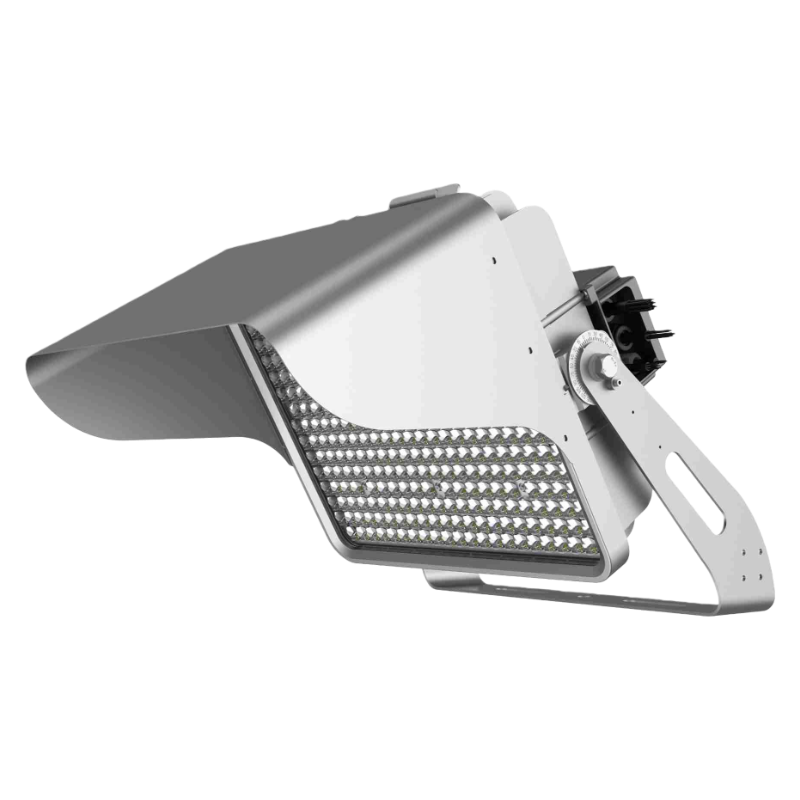
LED flood lights are celebrated for their long lifespan and low maintenance—two key reasons they’ve replaced traditional halogen and metal halide fixtures in residential, commercial, and industrial settings. But while modern LEDs promise 50,000–100,000 hours of operation (up to 22 years with daily 12-hour use) , their actual performance depends on product quality, environmental conditions, and proper maintenance. For property managers, contractors, and homeowners in 2026, understanding how to maximize LED flood light lifespan and implement effective maintenance routines is critical to avoiding premature failures and maximizing return on investment. This comprehensive guide breaks down everything you need to know about LED flood light longevity, common wear factors, and step-by-step maintenance best practices.
Understanding LED Flood Light Lifespan: What “L70” Really Means
Unlike traditional bulbs that fail abruptly, LED flood lights degrade gradually over time—a process measured by light decay (lumen depreciation). The industry standard for LED lifespan is “L70,” defined as the number of hours it takes for a fixture’s light output to drop to 70% of its initial brightness (the point where dimming becomes noticeable) . In 2026, most quality LED flood lights boast an L70 lifespan of 50,000–100,000 hours, while premium industrial models can reach 150,000 hours . By comparison, halogen flood lights last just 2,000–2,500 hours, and metal halide fixtures top out at 10,000–15,000 hours .
It’s important to distinguish between nominal lifespan (manufacturer’s rating under ideal conditions: 25°C ambient temperature, stable voltage, minimal use) and actual lifespan (real-world performance). In harsh outdoor environments—such as coastal areas with salt spray, industrial sites with high heat, or regions with voltage fluctuations—actual lifespan may shrink to 20,000–30,000 hours (5–8 years) . Conversely, in controlled settings like covered parking lots or residential gardens, LED flood lights can approach or exceed their nominal lifespan.
Key Factors That Impact LED Flood Light Lifespan (2026 Update)
Several interconnected factors determine how long your LED flood lights will last. Prioritizing these during selection and installation can add years to their performance:
1. Heat Dissipation (The #1 Lifespan Driver)
LEDs convert only 10–20% of energy into light—80–90% becomes heat . Excess heat raises the LED chip’s junction temperature, accelerating light decay: for every 10°C increase in temperature, lifespan can drop by 50% . High-quality LED flood lights feature:
- Die-cast aluminum heat sinks with finned designs (maximizes surface area for heat transfer)
- Thermal management systems (some industrial models use heat pipes for active cooling)
- Balanced sealing (IP65/IP66 ratings protect against dust/water without trapping heat)
Avoid cheap fixtures with plastic housings or inadequate heat sinks—these often fail within 2–3 years due to overheating.
2. LED Driver Quality
The driver is the “brain” of the fixture, converting AC power to DC and regulating voltage/current. It’s the most common failure point in LED flood lights:
- Premium drivers: Use high-temperature electrolytic capacitors (50,000+ hour lifespan), offer surge protection (6kV–10kV), and include over-voltage/over-temperature safeguards. Brands like Mean Well or Inventronics drivers extend fixture life significantly .
- Low-cost drivers: Cut corners on components, leading to voltage fluctuations that damage LED chips. These typically fail within 1–2 years, even if the LEDs themselves are intact.
3. Environmental Conditions
Outdoor exposure is the biggest test for LED flood lights. Key environmental stressors include:
- Temperature extremes: Prolonged heat (above 40°C) degrades components; extreme cold (below -20°C) can affect driver capacitor performance .
- Moisture & corrosion: High humidity, salt spray (coastal areas), or industrial chemicals can cause internal rust or short circuits—hence the importance of IP65/IP66 ratings . IP66 fixtures with double gaskets and corrosion-resistant coatings last 30–50% longer in harsh wet environments than IP65 models .
- Dust & debris: Accumulation on heat sinks blocks 散热,raising temperatures. This is especially problematic in construction zones or desert regions.
- Vibration: Frequent vibration (e.g., near highways or heavy machinery) can loosen solder joints, leading to intermittent operation or failure.
4. Usage Patterns
- Switch frequency: Frequent on/off cycles create current spikes that stress LEDs and drivers. Use photocells or timers to minimize unnecessary switching .
- Voltage stability: Grid fluctuations (common in rural areas or construction sites) damage drivers over time. Installing surge protectors or voltage regulators can extend lifespan by 20–30% .
- Overdriving: Some low-quality fixtures operate LEDs at higher currents to boost brightness, drastically shortening life. Look for fixtures with lumen-to-watt ratios aligned with industry standards (120–200 lm/W in 2026) .
2026 LED Flood Light Maintenance Schedule & Best Practices
LED flood lights require minimal maintenance, but proactive care can extend their lifespan by 30–50% and prevent costly downtime. Follow this seasonally adjusted schedule:
Monthly Maintenance (5-Minute Checks)
- Inspect fixtures for visible damage (cracks in housing, loose brackets, or broken lenses).
- Check for water intrusion (fogging inside the lens indicates a failed seal—address immediately to avoid corrosion) .
- Verify light output: Dimming or uneven brightness may signal driver issues or light decay.
Quarterly Maintenance (15–20 Minutes Per Fixture)
- Clean the housing and heat sinks: Use a soft brush or compressed air to remove dust, dirt, or debris. Avoid water jets (even for IP66 models) to prevent gasket damage .
- Tighten mounting hardware and electrical connections (vibration can loosen screws and wires).
- Test controls: Ensure photocells, motion sensors, or dimming features are functioning correctly.
Annual Maintenance (30 Minutes Per Fixture)
- Deep clean the lens: Use a mild detergent and soft cloth to remove grime (buildup can reduce light output by 10–15%) . Avoid abrasive cleaners that scratch the lens.
- Inspect seals and gaskets: Replace cracked or brittle gaskets (common in IP65 fixtures) to maintain water/dust resistance. IP66 double gaskets typically last 5+ years but should still be inspected .
- Check driver temperature: Use an infrared thermometer to ensure the driver housing doesn’t exceed 60°C during operation (overheating indicates a problem).
- Test voltage: Confirm the fixture is receiving stable power (within ±10% of the rated voltage).
Bi-Annual Maintenance (Industrial/Harsh Environments)
- Replace air filters (if equipped) in dust-heavy areas.
- Apply anti-corrosion spray to mounting brackets and hardware (critical for coastal or industrial sites).
- Conduct a full lumen output test: Use a light meter to compare current brightness to initial specifications. If output is below 70%, plan for replacement.
How to Extend LED Flood Light Lifespan: Pro Tips for 2026
Beyond routine maintenance, these strategies will maximize longevity and performance:
1. Choose the Right Fixture for the Environment
- Residential/commercial areas (moderate conditions): IP65 fixtures with aluminum heat sinks and 50,000+ hour L70 ratings (e.g., GS LIGHT 50W IP65 Flood Light) .
- Coastal/industrial areas (harsh conditions): IP66 fixtures with anti-corrosion coatings, double gaskets, and 70,000+ hour L70 ratings (e.g., Goodlight IP66 Outdoor Flood Light) .
- High-temperature areas (deserts, factories): Fixtures with active thermal management or oversized heat sinks.
2. Optimize Installation
- Avoid direct sunlight on the driver housing (install shade covers if necessary).
- Ensure proper ventilation—don’t enclose fixtures in tight spaces that trap heat.
- Mount fixtures at least 12 inches away from walls or other surfaces to improve 散热.
- Use surge protectors or UPS systems in areas with unstable power.
3. Use Smart Controls Wisely
- Implement dusk-to-dawn photocells to eliminate manual switching.
- Add motion sensors to dim lights to 20–30% during inactivity (reduces heat and energy use).
- Use dimming systems (0–10V or DALI) to lower brightness during non-peak hours—dimming by 50% can extend lifespan by 2–3 times .
4. Follow Warranty Guidelines
Most LED flood lights come with 2–10 year warranties (e.g., NVC 雷士照明 offers 2 years for outdoor LED flood lights, 5 years for premium models) . To maintain coverage:
- Keep purchase receipts and installation records.
- Avoid modifying the fixture (e.g., replacing drivers with non-OEM parts).
- Report issues promptly—warranties typically cover manufacturing defects but not damage from neglect or improper use.
Common LED Flood Light Failures & Troubleshooting (2026)
Even with proper care, issues may arise. Here’s how to diagnose and fix common problems:
|
Symptom
|
Possible Cause
|
Solution
|
|
Dim or flickering light
|
Driver failure, voltage fluctuation
|
Test voltage; replace driver with OEM part if needed.
|
|
Foggy lens
|
Failed gasket/seal (water intrusion)
|
Replace gasket; dry internal components; reseal fixture.
|
|
No light output
|
Driver burnout, loose wiring, or LED chip failure
|
Check wiring connections; test driver; replace fixture if LEDs are damaged.
|
|
Overheating driver
|
Blocked heat sink, poor ventilation
|
Clean heat sink; reposition fixture for better airflow.
|
|
Corroded hardware
|
Moisture/corrosive environment
|
Replace hardware; apply anti-corrosion spray; upgrade to IP66 if needed.
|
Final Thoughts: Maximizing Value in 2026
LED flood lights offer exceptional longevity, but they’re not maintenance-free. By understanding the factors that impact lifespan—heat dissipation, driver quality, environment, and usage—and implementing a proactive maintenance routine, you can ensure your fixtures deliver reliable performance for 10–20 years. In 2026, with energy costs rising and sustainability a priority, extending LED flood light lifespan isn’t just about saving money—it’s about reducing waste and minimizing your environmental footprint.
When selecting fixtures, prioritize quality over price: a $20 premium for a fixture with a better heat sink and driver can save hundreds in replacement costs over a decade. Pair quality products with smart installation and routine care, and your LED flood lights will reward you with years of bright, efficient illumination.