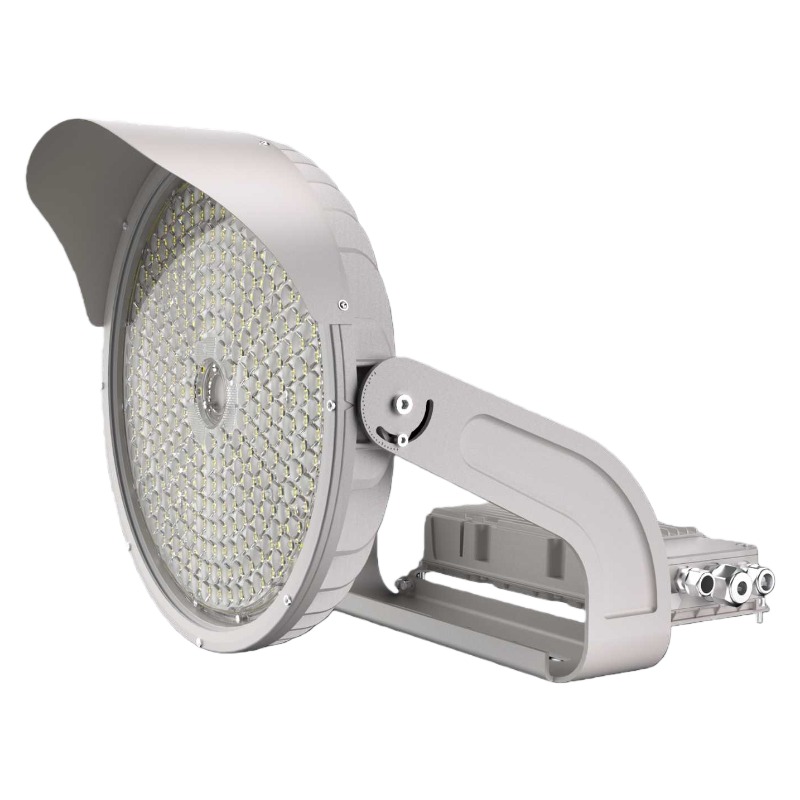
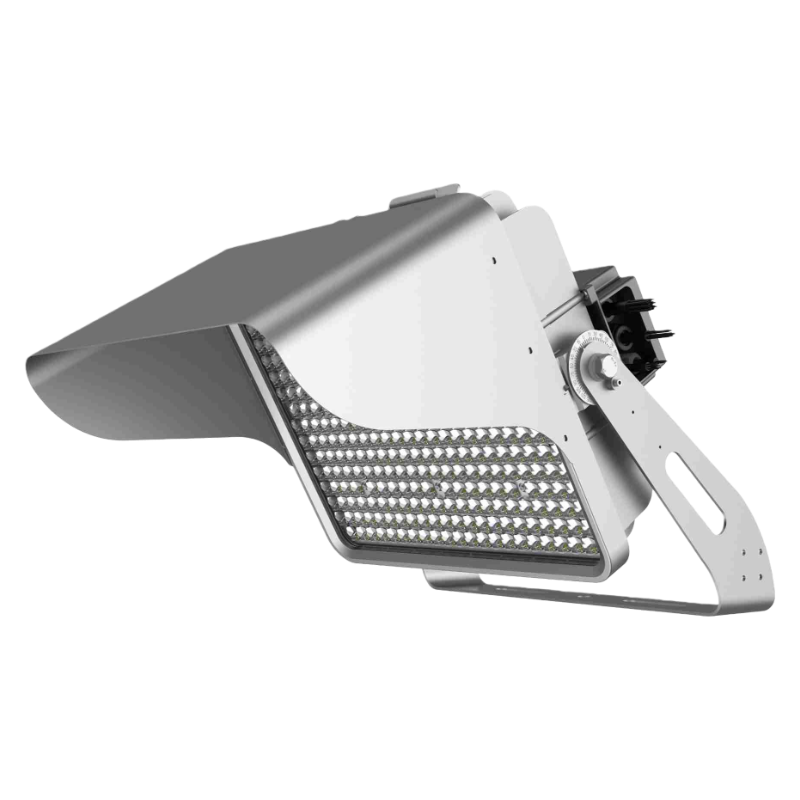
LED street lights are the backbone of outdoor public lighting—illuminating roads, sidewalks, parking areas, and neighborhoods with energy-efficient, long-lasting brightness. But their effectiveness depends heavily on mounting height: too low, and you’ll get uneven coverage and glare; too high, and light intensity drops, leaving dark spots. Unlike LED area lights (which have flexible mounting options), LED street lights require precise height calibration to meet safety standards, coverage goals, and local regulations. In this guide, we’ll break down the recommended mounting heights for LED street lights, key influencing factors, and practical tips to ensure optimal performance.
Why Mounting Height Is Critical for LED Street Lights
Before diving into specific heights, let’s clarify why this parameter is non-negotiable for street lighting:
- Coverage Uniformity: The right height ensures light spreads evenly across the road/sidewalk, eliminating blind spots that pose hazards for drivers and pedestrians.
- Glare Reduction: Properly elevated fixtures direct light downward, minimizing glare that can temporarily blind drivers or cyclists.
- Regulatory Compliance: Most cities and municipalities have strict guidelines for street light mounting heights (e.g., maximum height for residential roads, minimum height for highways).
- Energy Efficiency: Mounting height directly impacts required lumen output—too high a fixture may need extra wattage to maintain brightness, wasting energy.
- Safety & Security: Adequate height prevents vandalism (fixtures out of reach) and ensures visibility for security cameras or passersby.
Key Factors That Determine LED Street Light Mounting Height
The recommended mounting height isn’t a one-size-fits-all number—it’s shaped by four core factors:
- Road Type & Width: Narrow residential streets need lower heights than wide highways or commercial roads.
- Traffic Volume & Speed: High-speed roads (e.g., highways) require taller fixtures to cover longer distances and reduce glare for fast-moving vehicles.
- Fixture Beam Angle: Wide-beam angles (90°–120°) pair with shorter heights, while narrow-beam angles (60°–90°) work better with taller poles for long-distance coverage.
- Spacing Between Fixtures: Closer-spaced fixtures can be shorter, while wider-spaced ones need greater height to avoid gaps in coverage.
Recommended Mounting Heights for LED Street Lights (By Application)
Below is a detailed breakdown of industry-standard mounting heights for common LED street light applications, aligned with road type, traffic volume, and coverage needs:
1. Residential Streets & Neighborhood Roads
Residential areas prioritize low glare, pedestrian safety, and neighborhood aesthetics. Roads are typically narrow (10–20 feet wide) with low traffic speeds (25–35 mph).
- Recommended Mounting Height: 12–18 feet (3.7–5.5 meters)
- Key Details:
- Fixture Spacing: 50–80 feet apart (1.5–2x the mounting height)
- Beam Angle: 90°–120° (wide) for uniform coverage of narrow roads
- Lumen Output: 3,000–8,000 lm (50–100W)
- Why It Works: Low enough to avoid light trespass into homes, high enough to cover roads and sidewalks without glare. Ideal for cul-de-sacs, local streets, and residential subdivisions.
- Pro Tip: Opt for 12–15 feet for narrow streets (10–15 feet wide) and 15–18 feet for wider residential roads (15–20 feet wide).
2. Commercial Roads & Collector Streets
Commercial roads (e.g., main streets with shops) and collector streets (connecting residential areas to highways) are wider (20–30 feet) with moderate traffic volume and speeds (35–45 mph).
- Recommended Mounting Height: 18–25 feet (5.5–7.6 meters)
- Key Details:
- Fixture Spacing: 80–120 feet apart (2–2.5x the mounting height)
- Beam Angle: 60°–90° (medium-wide) to balance coverage and intensity
- Lumen Output: 8,000–15,000 lm (100–150W)
- Why It Works: Tall enough to cover wider roads and sidewalks, while minimizing glare for drivers and storefront pedestrians. Complies with most municipal codes for commercial zones.
- Pro Tip: For roads with parking lanes (adding 8–10 feet to width), increase height to 22–25 feet to cover the extra space.
3. Highways & Arterial Roads
Highways, freeways, and arterial roads are wide (30–60 feet) with high traffic speeds (45–70 mph) and heavy volume. They require long-distance coverage and minimal glare.
- Recommended Mounting Height: 25–35 feet (7.6–10.7 meters)
- Key Details:
- Fixture Spacing: 120–200 feet apart (3–4x the mounting height)
- Beam Angle: 45°–60° (medium-narrow) for focused, long-distance illumination
- Lumen Output: 15,000–30,000 lm (150–300W)
- Why It Works: Elevated height ensures light reaches across multiple lanes and far ahead of vehicles, reducing reaction time hazards. Narrower beam angles prevent glare for high-speed drivers.
- Pro Tip: For divided highways (with a median), mount fixtures on both sides of the median at 25–30 feet to cover each direction separately.
4. Parking Lots & Commercial Premises
Parking lots (mall, retail, office) and commercial premises require uniform coverage for vehicles and pedestrians, with no dark spots.
- Recommended Mounting Height: 15–25 feet (4.6–7.6 meters)
- Key Details:
- Fixture Spacing: 60–100 feet apart (2x the mounting height)
- Beam Angle: 90°–120° (wide) for even coverage of open areas
- Lumen Output: 5,000–12,000 lm (50–120W)
- Why It Works: Balances height and coverage to illuminate large, open spaces without glare. Prevents vandalism (fixtures out of reach) and ensures visibility for security.
- Pro Tip: For multi-level parking garages, use lower heights (10–15 feet) with wide beam angles (120°+) to cover each level’s width.
5. Pedestrian Paths & Bike Lanes
Sidewalks, bike lanes, parks, and pedestrian trails prioritize low glare and safe navigation for non-motorized users.
- Recommended Mounting Height: 10–15 feet (3–4.6 meters)
- Key Details:
- Fixture Spacing: 40–60 feet apart (1.5–2x the mounting height)
- Beam Angle: 100°–120° (extra-wide) for broad, gentle coverage
- Lumen Output: 2,000–5,000 lm (20–50W)
- Why It Works: Low height delivers targeted light to paths without dazzling pedestrians or cyclists. Extra-wide beam angles ensure no gaps between fixtures.
- Pro Tip: For narrow bike lanes (4–6 feet wide), use 10–12 feet heights to avoid light spillage onto adjacent roads.
How to Calculate Exact Mounting Height for Your Project
For precision (especially for custom road widths or irregular spaces), use this simple formula to determine optimal height:
- Measure Road/Area Width: For roads, measure the total width (including sidewalks if needed). For parking lots, measure the widest section.
- Determine Required Coverage Radius: The coverage radius should be at least half the width of the area (e.g., a 20-foot wide road needs a 10-foot coverage radius per side).
- Use Beam Angle to Calculate Height: Use the formula:
Mounting Height (ft) = Coverage Radius (ft) ÷ tan(Beam Angle/2)
Example: A 20-foot wide commercial road with a 90° beam angle:
Coverage Radius = 10 ft; tan(45°) = 1 → Height = 10 ÷ 1 = 10 ft (adjust to 18–25 ft for traffic speed).
Common Mounting Height Mistakes to Avoid
- Mounting Too Low for Wide Roads: A 12-foot fixture on a 30-foot wide arterial road will leave the center of the road dark, creating hazards.
- Mounting Too High for Residential Areas: A 25-foot fixture on a narrow residential street will cause light trespass into homes and waste energy.
- Ignoring Beam Angle Pairing: A narrow 45° beam angle on a 15-foot pole will only cover a small spot, while a wide 120° beam on a 30-foot pole will spread light too thin.
- Overlooking Spacing: Mounting fixtures too far apart (e.g., 200 feet apart on a 20-foot tall pole) creates dark gaps—stick to 1.5–4x the height for spacing.
- Disregarding Local Codes: Many cities cap residential street light heights at 18 feet or require permits for heights over 25 feet—always check municipal guidelines.
Additional Tips for LED Street Light Mounting Height
- Comply with Local Regulations: Contact your city’s transportation or planning department for specific height limits (e.g., NYC restricts residential street lights to 16 feet, while highways allow up to 35 feet).
- Consider Wind Load: Taller poles (25+ feet) need to be wind-resistant—choose poles with a minimum diameter of 6 inches and concrete footings at least 3 feet deep.
- Match Height to Fixture Weight: Heavier fixtures (30+ lbs.) require sturdier poles—avoid mounting heavy LED street lights on thin poles (less than 4 inches diameter) at heights over 20 feet.
- Test Before Permanent Installation: For large projects, use temporary poles to test height and coverage—adjust as needed to eliminate glare or dark spots.
- Prioritize Accessibility: Ensure fixtures are mounted at a height that’s accessible for maintenance (e.g., 15–25 feet for easy access with a bucket truck).
Final Thoughts
The recommended mounting height for LED street lights ranges from 10 feet (pedestrian paths) to 35 feet (highways), depending on road type, width, traffic speed, and coverage needs. The key is to balance height, beam angle, and spacing to achieve uniform, glare-free illumination that meets safety standards and local regulations.
Remember: Mounting height is a critical part of your street lighting system—not an afterthought. By following industry guidelines, calculating based on your specific space, and avoiding common mistakes, you’ll ensure your LED street lights deliver reliable, efficient, and safe illumination for years to come. If you’re unsure, consult a lighting engineer or municipal planner to tailor the height to your project’s unique requirements!