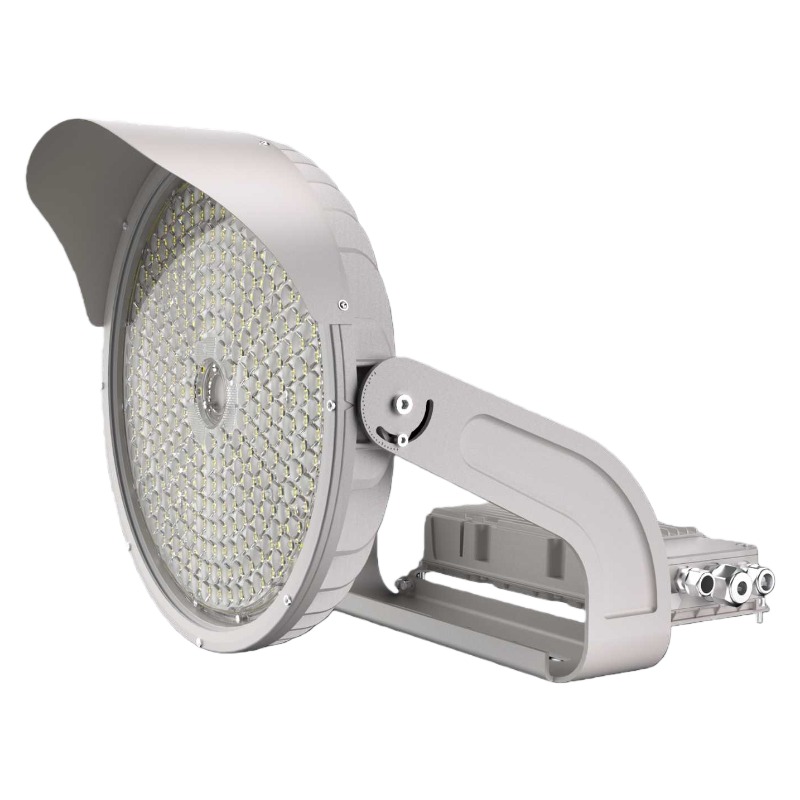
Street lights are an indispensable part of urban and rural infrastructure, ensuring road safety, facilitating nighttime travel, and enhancing public security. With the global push for energy conservation, smart city construction, and efficient public management, the traditional manual or time-controlled street lighting model has gradually been replaced by advanced street light control systems. These systems not only realize intelligent management of street lights but also significantly reduce energy consumption, lower maintenance costs, and lay a solid foundation for smart city operations.
For urban managers, electrical engineers, and relevant construction practitioners, understanding the core knowledge of street light control systems is crucial for optimizing lighting infrastructure, improving management efficiency, and achieving sustainable development goals. This blog will delve into various aspects of street light control systems, including their definition, main types, core functions, key components, application scenarios, selection criteria, and future development trends. By the end, you will have a comprehensive and in-depth understanding of this important smart city component.
1. What Is a Street Light Control System? Core Definition & Significance
A street light control system is an integrated management platform that combines power electronics, communication technology, and software algorithms to realize centralized or distributed control, monitoring, and management of street lighting fixtures. Unlike traditional street lighting that relies on fixed timers or manual switching, modern street light control systems can adjust lighting parameters (such as brightness, switching time) in real time according to actual needs (such as traffic flow, ambient light, weather conditions), and remotely monitor the operating status of each street light.
The core significance of popularizing street light control systems lies in three aspects:
- Energy Conservation & Emission Reduction: By intelligently dimming and optimizing switching time, it can reduce unnecessary energy consumption. Data shows that smart street light control systems can save 30%-60% of electricity compared to traditional street lighting.
- Reduced Maintenance Costs: Through real-time monitoring of street light faults (such as short circuits, blackouts, and abnormal brightness), maintenance personnel can be dispatched accurately, avoiding blind inspections and reducing labor and material costs.
- Support for Smart City Construction: As an important part of the smart city sensing network, street light control systems can be integrated with other urban management systems (such as traffic monitoring, environmental monitoring, and emergency command) to provide data support for urban operation decisions.
2. Main Types of Street Light Control Systems: Classification by Communication Technology
The communication module is the core of the street light control system, responsible for data transmission between the control center and street light terminals. According to the different communication technologies adopted, street light control systems can be divided into the following four main types, each with its own characteristics and applicable scenarios.
1) Power Line Carrier (PLC) Street Light Control System
PLC street light control systems use power lines as the communication medium to transmit control signals and data. They do not require additional wiring, relying on the existing power grid for data transmission, which is their biggest advantage.
Key Features: Low construction cost: No need to lay special communication cables, suitable for retrofitting existing street lighting systems.Simple installation: Directly connect the control terminal to the power line, reducing construction difficulty.Limitations:
Communication stability is easily affected by power grid interference (such as voltage fluctuations, electromagnetic noise); transmission rate is relatively low, not suitable for large-scale data transmission.
Applicable Scenarios: Small and medium-sized cities, rural areas, or old urban areas where the power grid is relatively stable and there is no need for large-scale data interaction.
2) Wireless RF (Radio Frequency) Street Light Control System
- Wireless RF street light control systems use radio frequency signals (such as 433MHz, 868MHz, 915MHz) for short-distance data transmission. They adopt point-to-point or point-to-multipoint communication modes, with strong flexibility.
- Key Features: Strong anti-interference ability: Not affected by power grid conditions, stable communication in complex environments.Flexible networking: Suitable for scattered street light layouts (such as suburban roads, scenic area roads).Limitations: Limited communication distance (usually within 1km); need to consider signal shielding (such as tall buildings, trees).
- Applicable Scenarios: Suburban roads, scenic areas, industrial parks, and other areas where street lights are scattered and wiring is difficult.
3) Cellular Network (4G/5G/NB-IoT) Street Light Control System
This type of system relies on public cellular networks (4G, 5G) or low-power wide-area networks (NB-IoT) for data transmission. It has the advantages of wide coverage and long communication distance, and is the mainstream choice for smart city street light construction.
Key Features: Wide coverage: Relying on the existing cellular base station network, it can realize full coverage of urban and rural areas without additional networking.High transmission rate (4G/5G): Supports large-scale data transmission, which can carry additional functions such as video monitoring and environmental sensing.Low power consumption (NB-IoT): Suitable for low-frequency data transmission scenarios, extending the service life of terminal equipment batteries.Limitations: Need to pay communication fees; in areas with poor cellular signal (such as remote mountainous areas), communication stability may be affected.
Applicable Scenarios: Large and medium-sized cities, smart city demonstration areas, and roads that need to integrate multiple smart functions (such as traffic flow monitoring, environmental monitoring).
4) LoRa (Long Range) Street Light Control System
LoRa is a low-power wide-area network technology with the characteristics of long distance, low power consumption, and large capacity. LoRa street light control systems usually adopt a "terminal-node-gateway-cloud" architecture, which is suitable for large-scale street light networking.
Key Features: Ultra-long communication distance: The single-hop communication distance can reach 3-10km in open areas, reducing the number of gateways needed.Low power consumption: Terminal equipment can work for a long time with battery power, suitable for areas without stable power supply.Large networking capacity: A single gateway can connect thousands of terminal devices, suitable for large-scale urban street light management.Limitations: Need to deploy dedicated LoRa gateways, with higher initial investment; signal is easily affected by obstacles.
Applicable Scenarios: Large-scale urban street light networks, new urban areas, and areas that require long-term stable operation with low power consumption.
3. Core Functions of Street Light Control Systems: From Basic Control to Intelligent Management
Modern street light control systems have evolved from simple switching control to integrated intelligent management platforms, with the following core functions:
1) Intelligent Switching & Dimming Control
This is the most basic function of the system. It can realize automatic switching of street lights based on multiple triggers:
- Photocell Control: Automatically turn on the lights when the ambient light intensity is lower than a set threshold (such as dusk) and turn off the lights when it is higher than the threshold (such as dawn).
- Time Control: Set fixed switching times for different periods (such as working days, weekends, holidays) to adapt to changes in daylight hours and travel needs.
- Intelligent Dimming: Adjust the brightness of street lights according to traffic flow and time periods. For example, keep 100% brightness during peak travel hours (18:00-22:00) and dim to 30%-50% brightness during low-traffic periods (22:00-6:00) to save energy.
2) Real-Time Monitoring & Fault Alarm
The system can remotely monitor the operating status of each street light in real time, including parameters such as voltage, current, power, and brightness. When a fault occurs (such as a street light not turning on, short circuit, overheating, or abnormal dimming), the system will immediately send an alarm to the control center (via SMS, APP push, or platform notification), and accurately locate the fault location. This avoids the traditional "patrol inspection" mode, greatly improving the efficiency of fault handling.
3) Data Statistics & Analysis
The system automatically collects and stores operating data of street lights, such as electricity consumption, operating time, fault records, and dimming records. Through data analysis, it can generate reports such as energy consumption statistics, maintenance records, and equipment health status. These data can help urban managers optimize lighting strategies, evaluate the performance of street light equipment, and formulate scientific maintenance plans.
4) Remote Control & Manual Intervention
In addition to automatic control, the system supports remote manual control. Managers can remotely turn on, turn off, or dim a single street light, a group of street lights, or all street lights through the control platform (computer terminal or mobile APP) according to special needs (such as emergency repairs, temporary activities, and severe weather).
5) Extended Smart Functions (For Smart Cities)
With the development of smart cities, street light control systems are increasingly integrated with other urban management functions, such as:
- Traffic Flow Monitoring: Integrate cameras or sensors to monitor road traffic flow and adjust street light brightness according to traffic conditions.
- Environmental Monitoring: Connect sensors to detect air quality (PM2.5, PM10), temperature, humidity, and noise, providing data support for environmental management.
- Emergency Call & Positioning: Set emergency call buttons on street light poles to realize one-key alarm for pedestrians, and the system can accurately locate the alarm position to support emergency disposal.
- Smart Parking Guidance: Integrate parking space sensors to guide drivers to find empty parking spaces through street light-mounted displays or mobile APPs.
4. Key Components of a Street Light Control System: How It Works
A complete street light control system is composed of three core parts: terminal equipment, communication network, and control center. Each part cooperates with each other to realize the full-link management of street lights.
1) Terminal Equipment (On-Street Light Pole)
Terminal equipment is the "executor" and "sensor" of the system, installed on each street light pole. The main components include:
- Smart Controller (RTU/DTU): The core of terminal equipment, responsible for receiving control signals from the control center, executing switching and dimming commands, collecting operating data of street lights, and transmitting data to the control center through the communication network.
- Dimming Driver: Cooperates with the smart controller to adjust the brightness of street lights. It is compatible with different types of street light sources (LED, sodium lamp, metal halide lamp), among which LED street lights are the most commonly used due to their good dimming performance.
- Photocell Sensor: Detects ambient light intensity and provides a basis for automatic switching of street lights.
- Current/Voltage Sensor: Collects electrical parameters such as voltage, current, and power of street lights to monitor operating status and detect faults.
- Communication Module: Matches the communication technology of the system (such as PLC module, RF module, 4G/NB-IoT module, LoRa module) to realize data transmission.
2) Communication Network
As the "nerve channel" of the system, it is responsible for data transmission between terminal equipment and the control center. The type of communication network (PLC, wireless RF, 4G/5G/NB-IoT, LoRa) has been introduced in detail in the previous section, and the choice depends on the actual application scenario and functional requirements.
3) Control Center (Software Platform)
The control center is the "brain" of the system, usually composed of a server, software platform, and monitoring terminal (computer, mobile phone). Its main functions include:
- Platform Management: Realize the management of terminal equipment (addition, deletion, modification, query), user authority management, and system parameter setting.
- Real-Time Monitoring: Display the operating status of all street lights on the map in real time (such as on/off status, brightness, electrical parameters), and highlight fault equipment.
- Control Operation: Provide manual control interfaces (single control, group control, full control) to realize remote switching and dimming.
- Alarm Management: Receive fault alarms from terminal equipment, record alarm information (time, location, fault type), and support alarm notification and processing tracking.
- Data Analysis & Report: Generate various statistical reports (energy consumption report, fault report, maintenance report) to provide decision support for managers.
5. How to Choose a Suitable Street Light Control System? Key Selection Criteria
Choosing a suitable street light control system needs to comprehensively consider factors such as application scenarios, functional requirements, budget, and future scalability. The following are key selection criteria:
1) Match Application Scenarios & Communication Technology
For old urban areas with existing power grids and difficult wiring, PLC systems or wireless RF systems can be selected; for large-scale smart cities that require wide coverage and multiple smart functions, 4G/5G/NB-IoT systems are preferred; for remote areas with scattered street lights and poor cellular signals, LoRa systems are more suitable.
2) Clarify Functional Requirements
If only basic switching and dimming functions are needed, a simple PLC or wireless RF system can be selected; if functions such as real-time fault alarm, data analysis, and remote control are required, a 4G/NB-IoT or LoRa system with a complete software platform is needed; if smart city extended functions (traffic monitoring, environmental monitoring) are required, a 4G/5G system with high data transmission rate should be selected.
3) Consider Energy Efficiency & Compatibility
The system should have good dimming performance to maximize energy savings; at the same time, it should be compatible with existing street light equipment (such as retrofitting old sodium lamps) to reduce replacement costs. It is recommended to choose systems that support LED dimming, as LED street lights have higher energy efficiency and longer lifespan.
4) Evaluate Stability & Reliability
Street light control systems need to operate 24/7 in outdoor environments (subject to wind, rain, high temperature, low temperature, and electromagnetic interference). Therefore, terminal equipment should have good waterproof, dustproof, and anti-interference performance (such as IP65+ protection level); the communication network should be stable, and the control platform should have good anti-crash and data backup capabilities.
5) Pay Attention to Scalability & After-Sales Service
With the development of smart cities, the functional requirements of street light control systems may increase. It is recommended to choose a system with good scalability (such as supporting the addition of new sensors and functions through software upgrades); at the same time, choose manufacturers with perfect after-sales service, including technical support, equipment maintenance, and platform upgrades, to ensure the long-term stable operation of the system.
6) Balance Budget & Investment Return
Different types of systems have different investment costs: PLC and wireless RF systems have lower upfront investment, while 4G/5G/NB-IoT and LoRa systems have higher initial investment (especially LoRa, which requires deploying dedicated gateways). However, high-investment systems usually have better energy-saving effects and more extended functions, and can achieve higher return on investment in the long run. Managers should balance the upfront budget and long-term energy-saving and maintenance cost savings.
6. Future Trends of Street Light Control Systems: Towards More Intelligent & Integrated Development
With the continuous advancement of technologies such as the Internet of Things (IoT), big data, artificial intelligence (AI), and 5G, street light control systems will show the following development trends in the future:
1) Integration with AI & Big Data
By integrating AI algorithms and big data analysis, the system can predict traffic flow and pedestrian volume based on historical data, and automatically adjust lighting strategies to achieve "on-demand lighting"; at the same time, it can predict equipment faults (such as component aging) based on operating data of street lights, realizing predictive maintenance and further reducing maintenance costs.
2) Deep Integration with Smart City Ecosystems
Street light poles will become important "smart poles" in smart cities, integrating more functions such as 5G base stations, video surveillance, environmental monitoring, emergency calls, smart parking, and electronic displays. The street light control system will serve as the core management platform of smart poles, realizing the integrated management of multiple urban facilities and improving the efficiency of urban operation.
3) Adoption of More Advanced Communication Technologies
5G technology will be more widely used in street light control systems, with higher transmission rates and lower latency, supporting more real-time and large-data-volume applications (such as high-definition video monitoring, vehicle-road coordination); at the same time, low-power wide-area network technologies such as NB-IoT and LoRa will be further optimized to improve coverage and stability.
4) Development of Self-Powered & Autonomous Control
Combined with renewable energy (solar energy, wind energy), street lights will realize self-power supply, and the control system will achieve autonomous control (without relying on the power grid and public communication networks), which is suitable for remote areas (such as mountainous areas, rural roads) where power supply and communication are difficult.
7. Common Problems & Solutions of Street Light
Control Systems
In the process of using street light control systems, some common problems may be encountered. Here are the corresponding solutions:
1) Unstable Communication & Data Loss
Reasons: Power grid interference (PLC system), signal shielding (wireless RF/LoRa system), poor cellular signal (4G/5G/NB-IoT system), or faulty communication modules. Solutions: For PLC systems, add anti-interference devices; for wireless systems, adjust the installation position of antennas or increase the number of gateways; for cellular systems, choose areas with strong signals or add signal amplifiers; check and replace faulty communication modules.
2) Inaccurate Automatic Switching & Dimming
Reasons: Incorrect setting of light intensity threshold (photocell sensor), deviation of time parameters, or faulty dimming drivers. Solutions: Calibrate the photocell sensor and reset the light intensity threshold; adjust the time parameters according to seasonal changes; check and replace faulty dimming drivers.
3) False Alarms & Missing Alarms
Reasons: Incorrect setting of alarm parameters, faulty sensors, or unstable data transmission. Solutions: Optimize alarm parameters (such as setting a delay alarm to avoid false alarms caused by transient voltage fluctuations); calibrate or replace faulty sensors; ensure stable communication to avoid missing alarms due to data loss.
4) High Energy Consumption of Terminal Equipment
Reasons: The terminal equipment does not have low-power design, or the dimming strategy is unreasonable. Solutions: Choose terminal equipment with low-power modules (such as NB-IoT, LoRa); optimize the dimming strategy (such as reducing brightness during low-traffic periods) to reduce energy consumption of street lights and terminal equipment.
Final Thoughts
The street light control system is an important part of urban infrastructure intelligence, which not only realizes energy conservation and emission reduction and reduces maintenance costs but also provides strong support for smart city construction. When choosing and applying a street light control system, it is necessary to comprehensively consider factors such as application scenarios, functional requirements, communication technology, and budget, and select a solution that is suitable for one's own needs.
With the continuous development of IoT, AI, and 5G technologies, street light control systems will move towards a more intelligent, integrated, and low-carbon direction, bringing more convenience to urban management and improving the quality of life of residents. If you are engaged in urban lighting construction or management, it is crucial to keep abreast of the latest developments in street light control systems and apply advanced technologies to optimize lighting infrastructure.