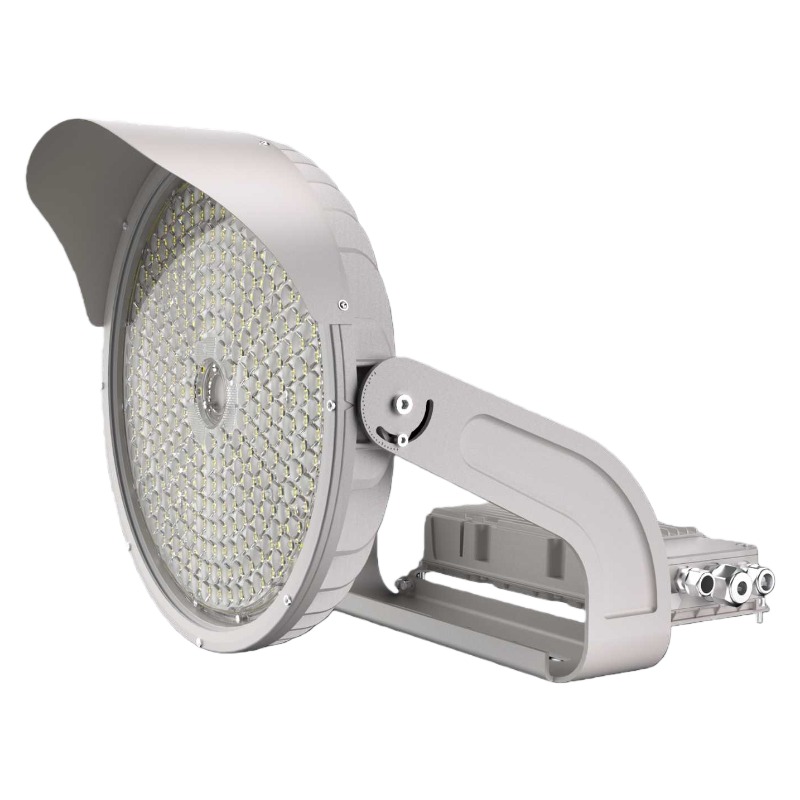
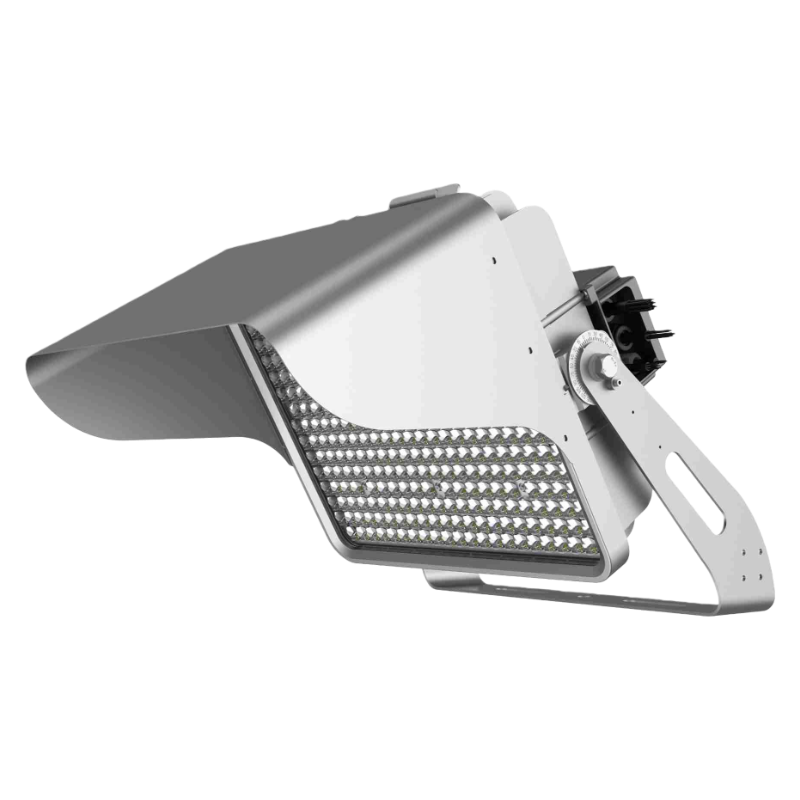
Baseball, a sport that combines skill, strategy, and speed, has unique and stringent requirements for field lighting. Unlike football or tennis, baseball features high-speed ball movement (with pitches reaching over 150 km/h) and a complex field layout (including infield, outfield, dugouts, and batter’s box), which demands precise, uniform, and glare-free lighting. Whether it’s a professional MLB stadium, a college baseball field, a youth training ground, or a community recreational field, high-quality lighting is not only the cornerstone of fair competition but also directly affects players’ judgment, spectators’ viewing experience, and the effect of live TV broadcasting.
With the evolution of lighting technology, LED lights have gradually replaced traditional metal halide lamps and high-pressure sodium lamps, becoming the mainstream choice for baseball field lighting upgrades and new constructions. However, many field managers, investors, and construction teams often face puzzles when planning LED baseball field lighting solutions: What are the professional lighting standards for baseball fields? How to select LED fixtures that match the field’s characteristics? What layout design can cover the entire field without blind spots? How to balance lighting performance and energy efficiency? This blog will provide a comprehensive and in-depth guide to LED baseball field lighting, covering all core aspects from lighting standards and fixture selection to layout design, installation maintenance, and smart control. Whether you are building a new baseball field or upgrading an existing lighting system, this article will help you make scientific and efficient lighting decisions.
1. Core Requirements & Professional Lighting Standards for LED Baseball Field Lighting
Before designing an LED baseball field lighting solution, it is essential to clarify the core requirements and abide by relevant professional standards. The lighting of baseball fields is more complex than that of other sports fields, as it needs to meet the visual needs of different positions (batters, pitchers, fielders, umpires) and adapt to the characteristics of high-speed ball movement. The key lighting indicators are clearly defined in international standards such as CIE 150:2019 and American standards such as MLB Lighting Standards, as well as domestic standards such as GB 50034-2013 and JGJ 153-2016. The core indicators include illuminance level, illuminance uniformity, glare control, color rendering index, and flicker index.
1) Illuminance Level: Adapt to Different Positions and Usage Scenarios
Illuminance level (measured in lux, lx) is the basic indicator of lighting brightness. Due to the different visual requirements of various positions on the baseball field, the illuminance requirements for different areas (infield, outfield, batter’s box, pitcher’s mound) are also different. At the same time, the illuminance level varies according to the usage scenario (professional competition, amateur training, youth games, TV broadcasting). The specific requirements are as follows:
-
Youth/Recreational Baseball Fields: Suitable for youth training and community recreational activities. The average horizontal illuminance of the infield should be ≥ 300 lx, and the outfield should be ≥ 200 lx. There is no special requirement for vertical illuminance.
-
Amateur/College Baseball Fields: For amateur competitions and college leagues. The average horizontal illuminance of the infield should be ≥ 750 lx, the outfield ≥ 500 lx, and the average vertical illuminance (critical for batters and pitchers) should be ≥ 500 lx.
-
Professional Non-Televised Baseball Fields: For professional leagues without TV broadcasting. The average horizontal illuminance of the infield should be ≥ 1500 lx, the outfield ≥ 1000 lx, and the average vertical illuminance ≥ 1000 lx.
-
Professional Televised Baseball Fields (e.g., MLB): The highest level of requirement. TV broadcasting has strict demands on light stability and color reproduction. The average horizontal illuminance of the infield should be ≥ 2500 lx, the outfield ≥ 2000 lx, and the average vertical illuminance ≥ 2000 lx. The peak illuminance should not exceed 3500 lx to avoid overexposure in TV imaging.
Special note: The batter’s box and pitcher’s mound are key areas, and their illuminance should be 10%-20% higher than the surrounding infield to ensure that batters can clearly see the pitch trajectory and pitchers can accurately aim.
2) Illuminance Uniformity: Avoid Blind Spots and Light-Dark Differences
Illuminance uniformity refers to the consistency of illuminance across the field surface, which is crucial for baseball fields. Poor uniformity will lead to blind spots or obvious light-dark transitions, making it difficult for fielders to accurately judge the direction and speed of the ball. The standard specifies two key uniformity indicators: overall uniformity (Uo = minimum illuminance/average illuminance) and local uniformity (Ul = minimum illuminance in a local area/average illuminance in the same area). Specific requirements are as follows:
-
Youth/Recreational Fields: Uo ≥ 0.6, Ul ≥ 0.7.
-
Amateur/College Fields: Uo ≥ 0.7, Ul ≥ 0.8.
-
Professional Non-Televised Fields: Uo ≥ 0.8, Ul ≥ 0.9.
-
Professional Televised Fields: Uo ≥ 0.9, Ul ≥ 0.95, to ensure consistent imaging effects across the entire TV screen and avoid affecting the audience’s viewing experience.
3) Glare Control: Protect Visual Comfort and Judgment Accuracy
Glare is the discomfort caused by excessive brightness contrast, which is a major hazard for baseball players—especially batters and pitchers, who need to focus on the small, high-speed ball. For baseball field lighting, the glare value (UGR) and glare rating (GR) are used to evaluate the glare level. The specific requirements are:
-
Youth/Recreational Fields: UGR ≤ 25, GR ≤ 50.
-
Amateur/College Fields: UGR ≤ 22, GR ≤ 45.
-
Professional Non-Televised Fields: UGR ≤ 19, GR ≤ 40.
-
Professional Televised Fields: UGR ≤ 16, GR ≤ 35. It is necessary to strictly avoid direct light shining into the batter’s eyes, pitcher’s eyes, and umpire’s field of vision.
4) Color Rendering Index: Restore True Colors of the Ball and Field
Color rendering index (CRI, Ra) measures the ability of light to restore the true color of objects. For baseball fields, a high CRI is essential for players to distinguish the white baseball from the green grass and for spectators to clearly perceive the game. The standard requires that the color rendering index of baseball field lighting should be ≥ 85; for professional televised fields, it is recommended to use lights with Ra ≥ 90 and R9 (red color rendering index) ≥ 50 to ensure that the colors of the ball, jerseys, and field are realistically reproduced in TV broadcasting.
5) Flicker Index: Ensure Light Stability and Avoid Ghosting
Flicker refers to the periodic fluctuation of light output. Severe flicker will not only cause visual fatigue but also produce ghosting in TV broadcasting, making it impossible to clearly capture the ball’s trajectory. For LED baseball field lighting, the flicker index (FI) should be ≤ 0.03, and the stroboscopic frequency should be ≥ 120Hz. For professional televised fields, ultra-low flicker (FI ≤ 0.01) and high-frequency stroboscopic (≥ 200Hz) LED lights are required to meet the requirements of high-definition slow-motion broadcasting.
2. LED Fixture Selection for Baseball Fields: Key Parameters & Advantages
Compared with traditional light sources such as metal halide lamps, LED lights have obvious advantages in energy efficiency, light quality, lifespan, and controllability, making them the optimal choice for baseball field lighting. When selecting LED fixtures, it is necessary to focus on key parameters and product types that match the characteristics of baseball fields.
1. Advantages of LED Lights Over Traditional Light Sources for Baseball Fields
-
High Energy Efficiency: LED lights have an efficacy of 150-200 lm/W, which is 3-6 times that of metal halide lamps. For a standard professional baseball field, using LED lights can save 60%-70% of electricity costs annually, significantly reducing the field’s operation cost.
-
Long Lifespan: The service life of LED lights is 50,000-100,000 hours, which is 5-8 times that of metal halide lamps. This greatly reduces the frequency of fixture replacement and maintenance costs—especially for high-altitude installations in large baseball fields, where maintenance work is difficult and risky.
-
Precise Light Distribution: LED lights can be equipped with professional optical lenses (such as TIR lenses) to achieve precise light control, ensuring that light is concentrated on the field surface without wasting energy or causing light pollution. This is crucial for improving illuminance uniformity and reducing glare.
-
Excellent Light Quality: LED lights can easily achieve Ra ≥ 85 (even Ra ≥ 90) and ultra-low flicker, meeting the strict requirements of professional baseball fields. They also have stable light output, without the "warm-up time" and "light decay" problems of traditional light sources.
-
Smart Controllability: LED lights support dimming (0-10V, DALI, DMX512) and smart control, allowing for brightness adjustment according to different usage scenarios (e.g., reducing brightness for training and increasing brightness for competitions). They also start instantly, which is suitable for emergency lighting and game interruptions.
-
Environmental Friendliness & Safety: LED lights do not contain mercury or other harmful substances, have low noise, and generate less heat—reducing the risk of fire and avoiding damage to the grass field due to excessive heat.
2. Key Parameters of LED Fixtures for Baseball Fields
-
Power: The required power of LED fixtures depends on the field size and illuminance requirements. A standard professional baseball field (infield diameter 27.43m, outfield radius 91.44m) usually requires 40-60 LED fixtures. For youth fields, 150-250W fixtures are suitable; for amateur/college fields, 300-500W fixtures are needed; for professional televised fields, 600-1000W ultra-high-power fixtures are required.
-
Beam Angle: The beam angle directly affects light distribution. For baseball fields, it is recommended to use fixtures with a beam angle of 15°-60°, and adopt a combination of narrow, medium, and wide beam angles:
-
Narrow beam angles (15°-30°): Suitable for long-distance projection to the outfield and key areas (batter’s box, pitcher’s mound), ensuring high illuminance.
-
Medium beam angles (30°-45°): Suitable for covering the infield and mid-outfield, balancing illuminance and coverage.
-
Wide beam angles (45°-60°): Suitable for covering the shallow outfield and surrounding areas (dugouts, spectator stands), ensuring uniform illumination.
-
-
UGR/GR Value & Anti-Glare Design: Choose LED fixtures with UGR ≤ 19 (professional) or UGR ≤ 22 (amateur). Fixtures with anti-glare lenses, honeycomb grids, or light-shielding covers are preferred to reduce glare. For key areas such as the batter’s box, it is recommended to use fixtures with asymmetric light distribution to avoid direct light exposure.
-
IP Rating: For outdoor baseball fields, LED fixtures must have a waterproof and dustproof rating of IP65 or higher to resist wind, rain, dust, and extreme weather (such as high temperatures and heavy snow). For indoor baseball facilities, IP44 or higher is sufficient.
-
IK Rating: Considering the possibility of collision, falling objects, or vandalism (especially in public youth fields), it is recommended to choose LED fixtures with IK07 or higher impact resistance to ensure structural integrity and durability.
-
Flicker Index: Choose LED fixtures with FI ≤ 0.03; for professional televised fields, FI ≤ 0.01 is required to meet the requirements of high-definition slow-motion broadcasting.
3. Recommended LED Fixture Types for Baseball Fields
-
LED High-Power Flood Lights with Precise Optical Design: The most commonly used type for baseball fields, with strong directional light and adjustable beam angles. Suitable for both outdoor and indoor fields, and can be installed on high light poles around the field. It is recommended to choose products with asymmetric light distribution to avoid glare in key areas.
-
LED Modular Stadium Lights: Modular design allows for flexible combination of power and light distribution according to the field size and lighting requirements. If a single module fails, it can be replaced individually, reducing maintenance costs and avoiding overall system shutdown. Suitable for large professional baseball stadiums.
-
Smart LED Stadium Lights: Equipped with sensors (motion sensors, light sensors) and smart control modules, they can automatically adjust the brightness according to the presence of people and ambient light. Suitable for youth and community fields that are not used all the time, further improving energy-saving effects.
-
LED Lights for Key Areas (Batter’s Box/Pitcher’s Mound): Specialized fixtures with narrow beam angles and anti-glare designs, providing targeted, high-brightness lighting for the batter’s box and pitcher’s mound. They can be independently controlled to adjust the illuminance according to needs.
3. LED Baseball Field Lighting Layout Design: Key Principles & Practical Schemes
Reasonable lighting layout is the key to ensuring uniform illuminance, avoiding glare, and meeting the special requirements of baseball fields. The layout design should be based on the field size, usage scenario, installation environment (outdoor/indoor), and the number of light poles. The following are the core principles and practical layout schemes:
1. Core Layout Principles
-
Symmetrical Layout with Focus on Key Areas: Adopt a symmetrical layout on both sides of the field to ensure overall illuminance uniformity. At the same time, increase the number of fixtures or adjust the beam angle for key areas (batter’s box, pitcher’s mound) to enhance illuminance.
-
High Installation Height to Reduce Glare: Install fixtures at a height of ≥ 12m (youth fields) or ≥ 18m (professional fields). The higher installation height can expand the light coverage, reduce the glare angle, and avoid direct light shining into the eyes of players and umpires.
-
Multi-Directional Lighting to Avoid Shadows: Adopt a multi-directional lighting layout (e.g., installing light poles on the first-base side, third-base side, and outfield) to reduce the contrast between light and shadow. This is crucial for fielders to accurately judge the ball’s bounce.
-
Control Light Pollution: For outdoor fields, choose fixtures with light-shielding covers and precise light distribution to avoid light spilling into surrounding residential areas or roads. Adjust the installation angle to reduce upward light leakage and protect the night sky environment.
-
Meet TV Broadcasting Requirements: For televised fields, the layout should ensure that the vertical illuminance is uniform, and the light direction should be consistent with the TV camera angle. Avoid installing fixtures in the camera’s field of vision to prevent lens flare.
2. Practical Layout Schemes for Different Baseball Fields
1) Youth/Community Baseball Field Layout (Little League Size: 60ft Base Path)
Scheme: A youth baseball field usually requires 12-16 LED flood lights installed on 6-8 light poles (3-4 poles on each side of the first and third bases, and 2 poles at the outfield). The light pole height is 12-15m, and the distance between the light pole and the field boundary is 3-4m. Use a combination of medium (30°-45°) and wide (45°-60°) beam angles: medium beam angles for the infield and wide beam angles for the outfield and dugouts. This layout can achieve an average horizontal illuminance of 300-500 lx, meeting the requirements of youth training and recreational activities.
2) Amateur/College Baseball Field Layout (Standard Adult Size: 90ft Base Path)
Scheme: An amateur/college baseball field requires 24-32 LED high-power flood lights installed on 12-16 light poles (6-8 poles on each side of the first and third bases, and 4-6 poles at the outfield). The light pole height is 15-18m, and the distance between the light pole and the field boundary is 4-5m. Adopt a combination of narrow (15°-30°), medium (30°-45°), and wide (45°-60°) beam angles: narrow beam angles for the outfield, medium beam angles for the infield, and wide beam angles for the dugouts and spectator stands. This layout can achieve an average horizontal illuminance of 750-1500 lx, with a uniformity ratio of ≥ 0.8.
3) Professional Televised Baseball Stadium Layout (MLB Standard Size)
Scheme: A professional televised baseball stadium requires 48-64 LED ultra-high-power modular stadium lights installed on 20-24 light poles (8-10 poles on each side of the first and third bases, 8-10 poles at the outfield, and 2-4 poles above the dugouts). The light pole height is 18-25m to increase the projection range and reduce glare. Adopt a multi-directional symmetrical layout, with fixtures arranged at different angles to ensure uniform vertical illuminance. Use narrow beam angles (15°-30°) for the outfield and key areas, and medium beam angles (30°-45°) for the infield. This layout can achieve an average horizontal illuminance of ≥ 2500 lx, an average vertical illuminance of ≥ 2000 lx, and a uniformity ratio of ≥ 0.95, meeting the requirements of high-definition TV broadcasting and slow-motion playback.
4) Indoor Baseball Facility Layout
Scheme: For indoor baseball facilities (such as training centers and indoor stadiums) with a ceiling height of ≥ 15m, use 36-48 LED high-power flood lights or modular stadium lights. Adopt a grid layout to evenly distribute the fixtures above the field, with a distance of 4-5m between fixtures. Adjust the installation angle to avoid light reflection from the floor and ceiling, and install light-absorbing materials on the walls to reduce glare. This layout can ensure uniform illuminance across the entire field, with a UGR value of ≤ 19.
4. Installation & Maintenance Precautions for LED Baseball Field Lighting
Scientific installation and regular maintenance are crucial to ensuring the stable operation, long service life, and good lighting effect of the LED baseball field lighting system. The following are key precautions:
1. Installation Precautions
-
Professional Installation Team: The installation of LED baseball field lighting should be carried out by professional electricians and high-altitude operation personnel with relevant qualifications. They need to be familiar with the special requirements of baseball field lighting and ensure that the circuit connection is correct, the fixtures are firmly fixed, and the waterproof and anti-corrosion measures are in place.
-
Light Pole Foundation Construction: For outdoor light poles, the foundation should be firm and meet the load-bearing requirements (considering wind load, the weight of fixtures, and the height of the pole). The foundation depth should be ≥ 2.5m for poles with a height of 18m or more, and concrete with sufficient strength should be used. The foundation should also be equipped with drainage measures to avoid water accumulation and corrosion.
-
Cable Laying & Protection: The power cables should be laid in protective pipes (PVC pipes or steel pipes) to avoid damage from external forces. For outdoor cables, use waterproof, UV-resistant, and high-temperature-resistant cables, and seal the cable joints with professional waterproof connectors to prevent water intake. For long-distance cable laying, calculate the voltage drop and choose cables with appropriate cross-sectional areas to ensure stable power supply.
-
Precise Test & Adjustment: After installation, use professional instruments (illuminance meter, flicker meter, glare meter) to test the illuminance, uniformity, flicker index, and glare value of the field. Adjust the angle and position of the fixtures according to the test results—especially for the batter’s box and pitcher’s mound. For televised fields, conduct on-site TV broadcasting tests to ensure that the lighting effect meets the broadcasting requirements.
2. Daily Maintenance & Regular Inspection
-
Regular Cleaning: Clean the surface of the fixtures and lenses every 3-6 months to remove dust, dirt, bird droppings, and other debris, which affect light transmission and heat dissipation. For fields in dusty or rainy areas, increase the cleaning frequency to once every 1-2 months.
-
Regular Inspection: Check the fixtures, light poles, cables, and connectors every 6-12 months. Focus on checking for loose connections, damaged waterproof seals, corroded parts, and abnormal heating of fixtures. Replace damaged components in time to avoid system failure and safety hazards.
-
Illuminance & Flicker Recalibration: Recalibrate the illuminance and flicker index of the field every 1-2 years. If the illuminance decreases by more than 20% or the flicker index exceeds the standard, adjust the fixture angle, replace the fixtures, or clean the lenses to ensure that the lighting effect meets the requirements.
-
Smart System Maintenance: For fields with smart lighting systems, regularly check the operation of sensors, control modules, and the central control platform. Update the system software, back up data, and test the smart functions (dimming, automatic on/off, fault alarm) to ensure they work normally.
5. Energy-Saving & Smart Control Strategies for LED Baseball Field Lighting
While ensuring the lighting effect, optimizing energy consumption and realizing smart management are important goals of modern baseball field lighting. The following are practical energy-saving and smart control strategies:
1. Scenario-Based Dimming Control
Install dimmable LED fixtures and matching dimming systems (0-10V, DALI, DMX512). Set different brightness levels for different usage scenarios: 30%-40% brightness for daily cleaning, 50%-60% brightness for youth training, 70%-80% brightness for amateur competitions, and 100% brightness for professional competitions. This can save 30%-50% of electricity costs compared to constant brightness operation.
2. Sensor-Controlled Intelligent Switching
Install motion sensors and light sensors on youth and community fields. The system can automatically turn on the lights when people enter the field and turn off the lights 5-10 minutes after people leave, avoiding energy waste caused by forgetting to turn off the lights. The light sensor can adjust the brightness according to the ambient light (e.g., increasing brightness on cloudy days and reducing brightness at dusk), ensuring a stable lighting effect.
3. Centralized Smart Control Platform
For large-scale baseball stadiums or sports centers with multiple fields, install a centralized smart control platform. Managers can remotely monitor the operating status of each field’s lighting system (voltage, current, power consumption, fault information) through a computer or mobile APP. They can also realize remote on/off, dimming, timing control, and group control of fixtures. For example, they can set the lights to automatically turn on 30 minutes before the game and turn off 30 minutes after the game, improving management efficiency and reducing labor costs.
4. Solar-LED Hybrid Lighting System (Outdoor Fields)
For outdoor fields in areas with sufficient sunlight, consider using a solar-LED hybrid lighting system. The system uses high-efficiency solar panels to charge the battery during the day, and the battery supplies power to the LED lights at night. This can completely or partially get rid of the dependence on the power grid, further reducing energy costs. It is recommended to choose long-life lithium-ion batteries and configure a grid-connected backup system to ensure stable operation on rainy days or in low-sunlight seasons.
5. Light Pollution Control & Energy Saving
Use LED fixtures with precise light distribution and light-shielding covers to reduce light spillage and upward light leakage, not only avoiding light pollution but also improving light utilization efficiency. For fields near residential areas, set up timing control to turn off non-essential lights (such as outfield auxiliary lights) after midnight, further saving energy and reducing the impact on residents’ rest.
6. Common Problems & Solutions in LED Baseball Field Lighting
In the process of using LED baseball field lighting, some common problems may be encountered. Here are the corresponding solutions:
1. Uneven Illuminance & Blind Spots in the Outfield
Reasons: Unreasonable fixture layout, inappropriate beam angle selection, or insufficient number of fixtures in the outfield. Solutions: Adjust the installation angle of the outfield fixtures to expand the light coverage; replace fixtures with narrower beam angles to increase the illuminance of the far outfield; add fixtures in blind spot areas to ensure uniform coverage.
2. Glare Affecting Batters and Pitchers
Reasons: Low installation height of fixtures, incorrect angle, or lack of anti-glare design. Solutions: Increase the height of the light poles; adjust the fixture angle to avoid direct light shining into the batter’s and pitcher’s eyes; replace fixtures with anti-glare lenses or add light-shielding covers; use asymmetric light distribution fixtures for key areas.
3. Flicker in TV Broadcasting
Reasons: The flicker index of LED fixtures exceeds the standard, or the power supply is unstable. Solutions: Replace LED fixtures with ultra-low flicker (FI ≤ 0.01); install a voltage stabilizer and surge protector to ensure stable power supply; check the connection of the dimming system and ensure that it works normally.
4. Waterproof Failure of Outdoor Fixtures
Reasons: Damaged waterproof seals, improper cable connection, low IP rating of fixtures, or poor drainage of the light pole foundation. Solutions: Replace damaged waterproof seals and re-seal the fixture joints; use professional waterproof connectors for cable connections; replace fixtures with IP65 or higher rating; improve the drainage of the light pole foundation to avoid water accumulation.
5. Rapid Light Decay of LED Fixtures
Reasons: Poor heat dissipation of fixtures, use of inferior LED chips or drivers, or severe dust accumulation on the heat sink. Solutions: Clean the heat sink of the fixtures to improve heat dissipation efficiency; replace inferior LED chips or drivers with high-quality ones; choose fixtures with good heat dissipation design (such as aluminum alloy housings with heat dissipation ribs and fans).
Final Thoughts
Designing a high-quality LED baseball field lighting solution requires comprehensive consideration of the sport’s unique characteristics, professional lighting standards, fixture selection, layout design, installation maintenance, and energy-saving control. Unlike other sports fields, baseball fields have strict requirements for key areas (batter’s box, pitcher’s mound) and high-speed ball visibility, which means that every link of the lighting solution must be precise and scientific.
When choosing a lighting solution, it is recommended to cooperate with professional lighting manufacturers or designers who have experience in baseball field lighting. They can conduct on-site surveys, customize personalized solutions according to the actual conditions of the field (size, usage scenario, environment), and provide professional installation, commissioning, and after-sales services. A good LED baseball field lighting system is not only an investment in the venue but also a guarantee for the safety of players, the fairness of the game, and the improvement of the viewing experience.
If you have more questions about LED baseball field lighting (such as how to calculate the number of fixtures needed for a specific field, which brand of LED fixtures is more suitable for professional televised games), feel free to leave a comment below!