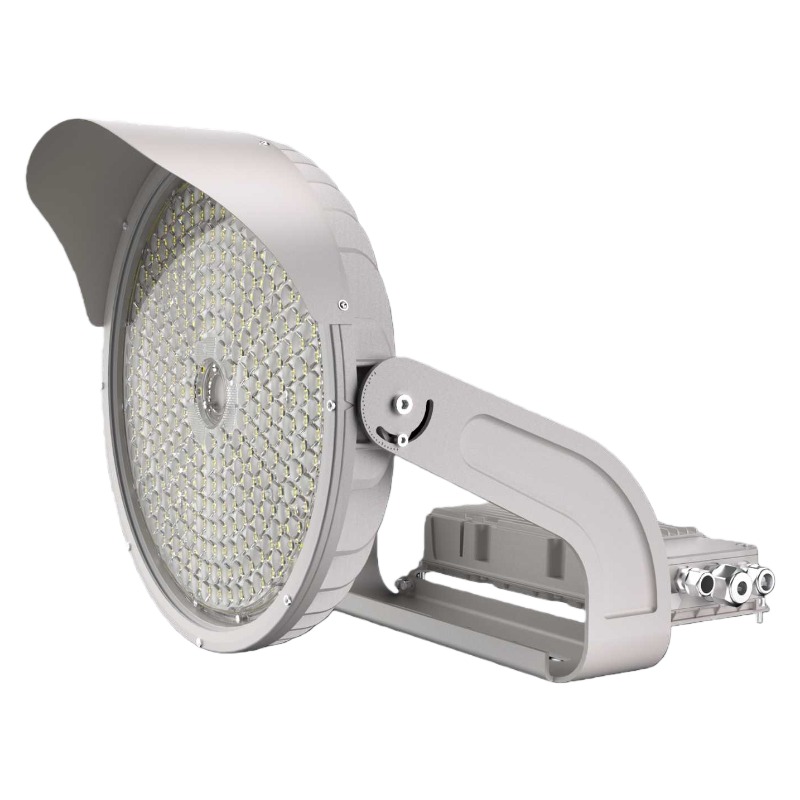
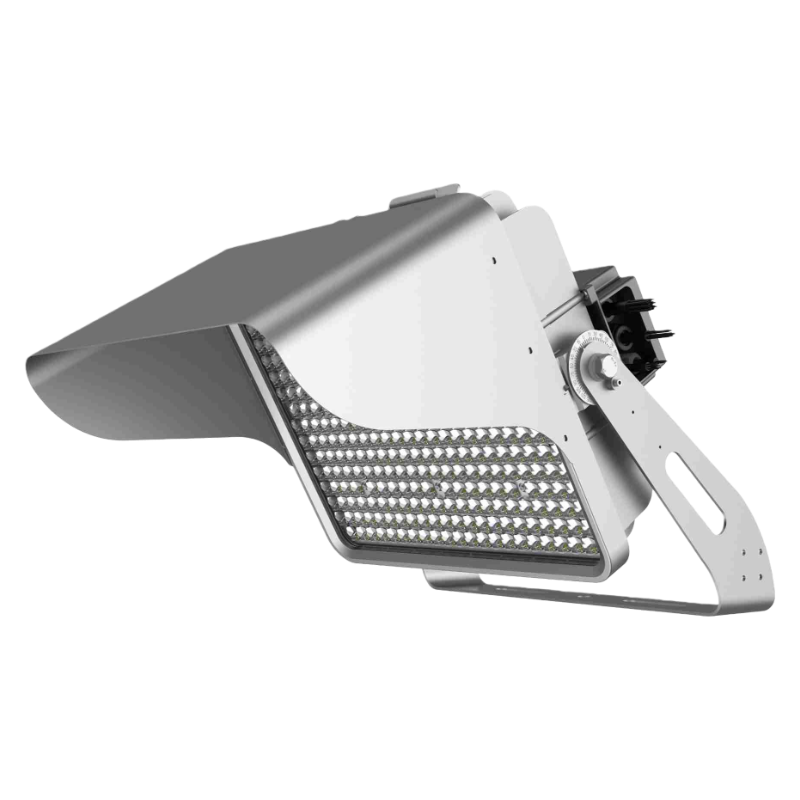
Professional sports lighting is defined by precision—lumens (the measure of actual light output) directly impact player performance, spectator experience, and broadcast quality. Too few lumens create dim, uneven conditions that risk injuries and ruin viewership; too many waste energy and cause glare. For professional leagues (FIFA, NFL, MLB, ATP), lumens are not just a recommendation but a mandatory standard. In this guide, we’ll break down the required lumens for professional sports lighting by sport type, stadium size, and broadcast needs, plus share actionable tips to ensure compliance and optimal performance.
Why Lumens Matter More Than Watts for Professional Sports Lighting
In professional sports, lumens are the gold standard—not watts. Here’s why:
- Uniform Brightness: Professional sports require consistent lumens across the entire field/court to eliminate dark spots (e.g., soccer field corners, baseball outfields).
- Broadcast Compatibility: HD/4K cameras demand high lumen density (lumens per square foot) to capture fast action without blur or grain.
- Player Safety & Performance: Athletes rely on precise visibility of the ball, opponents, and field markings—subpar lumens lead to misjudgments and injuries.
- Governing Body Compliance: Leagues like FIFA, NFL, and MLB mandate minimum lumen levels for professional competitions (non-negotiable for licensing).
- Energy Efficiency: LED technology delivers 110–130 lumens per watt (vs. 30–50 lumens/W for metal halide), so targeting the right lumens balances brightness and cost savings.
Key Factors That Determine Professional Sports Lighting Lumens
The required lumens for professional sports lighting depend on four critical factors:
- Sport Type: Fast-paced sports (soccer, hockey) need higher lumen density than sports with slower action (baseball, golf).
- Stadium/Field Size: Larger surfaces (e.g., NFL stadiums) require more total lumens to maintain uniform coverage.
- Broadcast Requirements: National/international broadcasts (e.g., Super Bowl, World Cup) need 2–3x more lumens than local broadcasts or practice sessions.
- Lighting Uniformity: Professional standards require a uniformity ratio (minimum to maximum lumens) of 0.7–0.8 (no more than 30% variation across the field).
Required Lumens for Professional Sports Lighting (By Sport)
Below is a detailed breakdown of lumen requirements for major professional sports, aligned with governing body standards (FIFA, NFL, MLB, ATP, IAAF) and broadcast needs:
1. Professional Soccer (FIFA Standards)
FIFA classifies professional soccer lighting into two tiers: National/International Broadcast (e.g., Champions League, World Cup) and Domestic Professional (e.g., MLS, EPL regular season).
Pro Tip: For international broadcast soccer stadiums (e.g., Wembley Stadium), use 40–60 LED fixtures with 120,000–150,000 lumens each (total 4.8–9 million lumens) to meet FIFA’s 1,000–1,200 lux requirement.
2. Professional Football (NFL Standards)
NFL stadiums require high lumen density to cover large fields (53,333 sq. ft.) and support 4K broadcast of fast-paced action.
Pro Tip: NFL stadiums typically use 50–70 LED fixtures (100,000–140,000 lumens each) with narrow beam angles (30°–45°) to concentrate light on the field and reduce glare.
3. Professional Baseball (MLB Standards)
MLB lighting requires targeted lumens for the infield (high density) and outfield (wider coverage), with strict uniformity to avoid blind spots for batters and fielders.
Pro Tip: MLB stadiums use a mix of fixtures—high-lumen (150,000–200,000) for the infield and medium-lumen (80,000–120,000) for the outfield—to balance density and coverage.
4. Professional Tennis (ATP/WTA Standards)
Tennis courts are smaller (2,808 sq. ft. for singles) but require extreme lumen density to track fast-moving balls (up to 125 mph) and avoid glare for players.
Pro Tip: Professional tennis courts use 8–12 LED fixtures (200,000–300,000 lumens each) mounted 25–30 feet high around the perimeter—never overhead—to eliminate glare.
5. Professional Basketball (NBA Standards)
NBA indoor stadiums require intense, uniform lumens for fast-paced play and 4K broadcast, with no glare for players or cameras.
Pro Tip: NBA stadiums use 20–25 LED fixtures (250,000–300,000 lumens each) with diffusers to soften light and eliminate hot spots.
6. Professional Track & Field (IAAF Standards)
IAAF professional track and field stadiums require uniform lumens for both the track (oval) and infield (often a soccer field), with no dark spots on curves or straightaways.
Pro Tip: Use a mix of narrow (30°) and wide (60°) beam angles—narrow for the track (concentrated lumens) and wide for the infield (uniform coverage).
How to Calculate Exact Lumens for Your Professional Sports Stadium
For custom-sized stadiums or unique sports, use this step-by-step formula to calculate required lumens:
- Measure Total Surface Area: Calculate the total square footage of the field/court (including boundaries).
- Determine Required Lumen Density: Reference governing body standards (e.g., FIFA = 92.9–111.5 lumens/sq. ft. for international broadcast).
- Calculate Base Lumens: Multiply surface area by lumen density (Base Lumens = Area × Density).
- Adjust for Light Loss: Factor in light loss from fixtures, mounting height, and environmental conditions (indoor = 1.1x; outdoor = 1.3x).
- Final Required Lumens: Base Lumens × Light Loss Adjustment = Total Lumens Needed.
Example: International Broadcast Soccer Stadium (57,600 sq. ft.):
- Lumen Density (FIFA) = 92.9 lumens/sq. ft. (1,000 lux)
- Base Lumens = 57,600 × 92.9 = 5,351,040 lumens
- Light Loss Adjustment (outdoor) = 1.3x
- Final Lumens = 5,351,040 × 1.3 = 6,956,352 lumens (≈7 million lumens total)
Pro Tip: Add 10% extra lumens to account for fixture aging (LEDs lose ~5% lumen output over 50,000 hours).
Common Lumen Mistakes to Avoid in Professional Sports Lighting
- Confusing Lux with Lumens: Lux = lumens per square meter; lumens = total light output. Always convert lux standards to lumens (1 lux = 0.0929 lumens/sq. ft.).
- Ignoring Uniformity: Even if total lumens are correct, poor uniformity (e.g., bright infield, dim outfield) will fail league inspections.
- Underestimating Light Loss: Outdoor stadiums lose 30% of lumens to distance and weather—skipping this adjustment leads to dim conditions.
- Prioritizing Wattage Over Lumens: A 1,000W LED with 130 lumens/W (130,000 lumens) is better than a 1,500W LED with 90 lumens/W (135,000 lumens) (similar lumens, lower energy use).
- Forgetting Broadcast Needs: Local broadcasts need ~500 lux; national broadcasts need 1,000+ lux—upgrade lumens if you plan to host major events.
Additional Tips for Professional Sports Lighting Lumens
- Choose High-Efficacy LEDs: Opt for fixtures with 120–130 lumens/W to minimize total energy use (e.g., 7 million lumens ÷ 125 lumens/W = 56,000W total).
- Invest in Dimmable Fixtures: Dimmable LEDs let you reduce lumens for practice (50% of game levels) and increase for broadcasts—saving energy without sacrificing performance.
- Check CRI & Color Temperature: Professional sports require CRI ≥ 80 (accurate color rendering) and color temperature 5,000–6,500K (daylight-like light).
- Work with a Certified Lighting Engineer: League standards are complex—an engineer will ensure lumens, uniformity, and glare meet all requirements.
- Test Before Events: Use a lux meter to verify lumen density and uniformity before hosting professional games or broadcasts.
Final Thoughts
Professional sports lighting requires precise lumen counts—ranging from 1.8 million lumens (domestic tennis) to 9.3 million lumens (international track and field)—to meet league standards and broadcast needs. The key is to align lumens with sport type, stadium size, and uniformity requirements, not just chase high numbers.
For quick reference, here’s the minimum total lumens for major professional sports:
- Soccer (International Broadcast): 4.6 million lumens
- Football (NFL Regular Season): 5 million lumens
- Baseball (MLB): 3.4 million lumens
- Tennis (Grand Slam): 2.6 million lumens
- Basketball (NBA): 4.7 million lumens
- Track & Field (IAAF International): 7.4 million lumens
Remember: Lumens are the foundation of professional sports lighting. Invest in high-quality LEDs, follow governing body guidelines, and consult a lighting engineer to ensure your stadium meets all requirements—delivering safe, exciting, and broadcast-ready illumination for athletes and fans alike!